



Every day in Namibia, thousands of people step onto roads by walking to school or work. They cross highways to reach taxi stops. They navigate informal footpaths along national roads. And too often, they become statistics.
For Robert Ambunda of the University of Namibia (UNAM), those statistics are not abstract numbers, they are the driving force behind research that could fundamentally change how Namibia designs its transport systems.
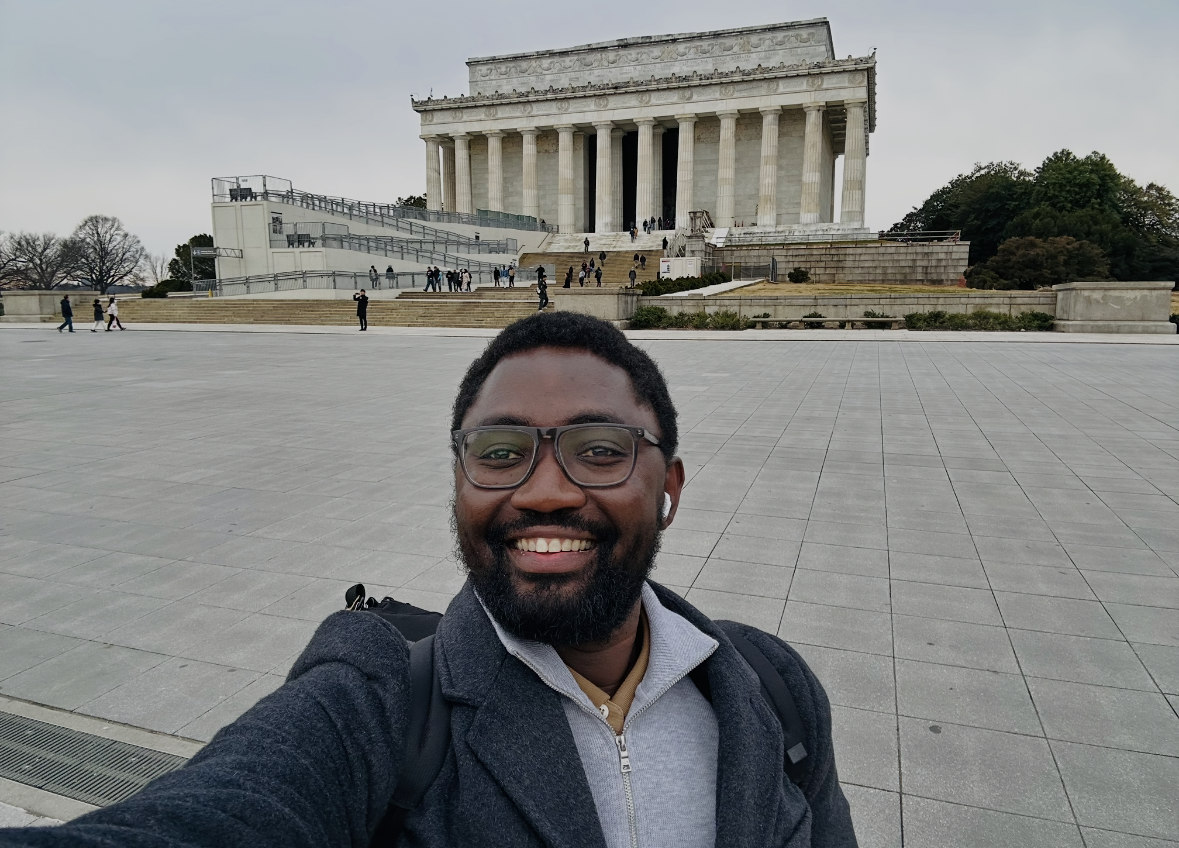
Currently undertaking a prestigious fellowship under the Fulbright Programme at the University of Alabama, Dr Ambunda’s work focuses on one urgent question: How do we build transport systems that are engineered around people not just vehicles?
The crisis on our roads
At the centre of his research is a stark reality: pedestrians remain among the vulnerable road users in Namibia. “The central issue driving my research is the high vulnerability and fatalities of pedestrians and road safety issues in Namibia,” he says. Despite expanding infrastructure and increasing motorisation, many roads in urban and peri-urban areas lack sidewalks, and protective design features. For low-income and marginalised communities, the risk is even greater.
“There are recurring challenges related to inadequate pedestrian infrastructure, unsafe road-user behaviour, enforcement gaps, and limited integration of climate-resilient and inclusive design principles,” he stated. In simple terms: roads are being built for cars, not for people. And when infrastructure overlooks people, the consequences are fatal.

From observation to action
Dr Ambunda’s research draws from national crash statistics, detailed crash investigation data, and road safety audits conducted across Namibia in collaboration with the Namibia National Road Safety Council between 2024 and 2025. These assessments mapped risk areas and exposed glaring gaps in active mobility infrastructure particularly for pedestrians and cyclists.
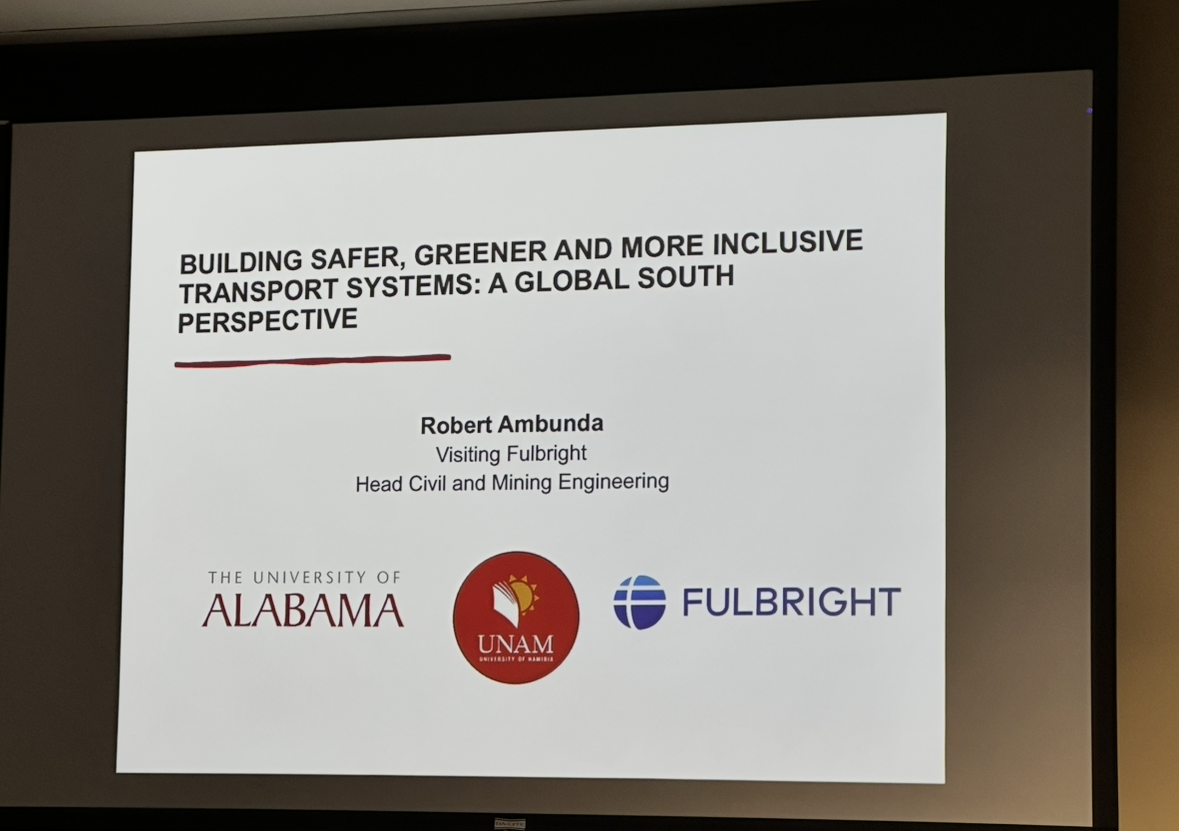
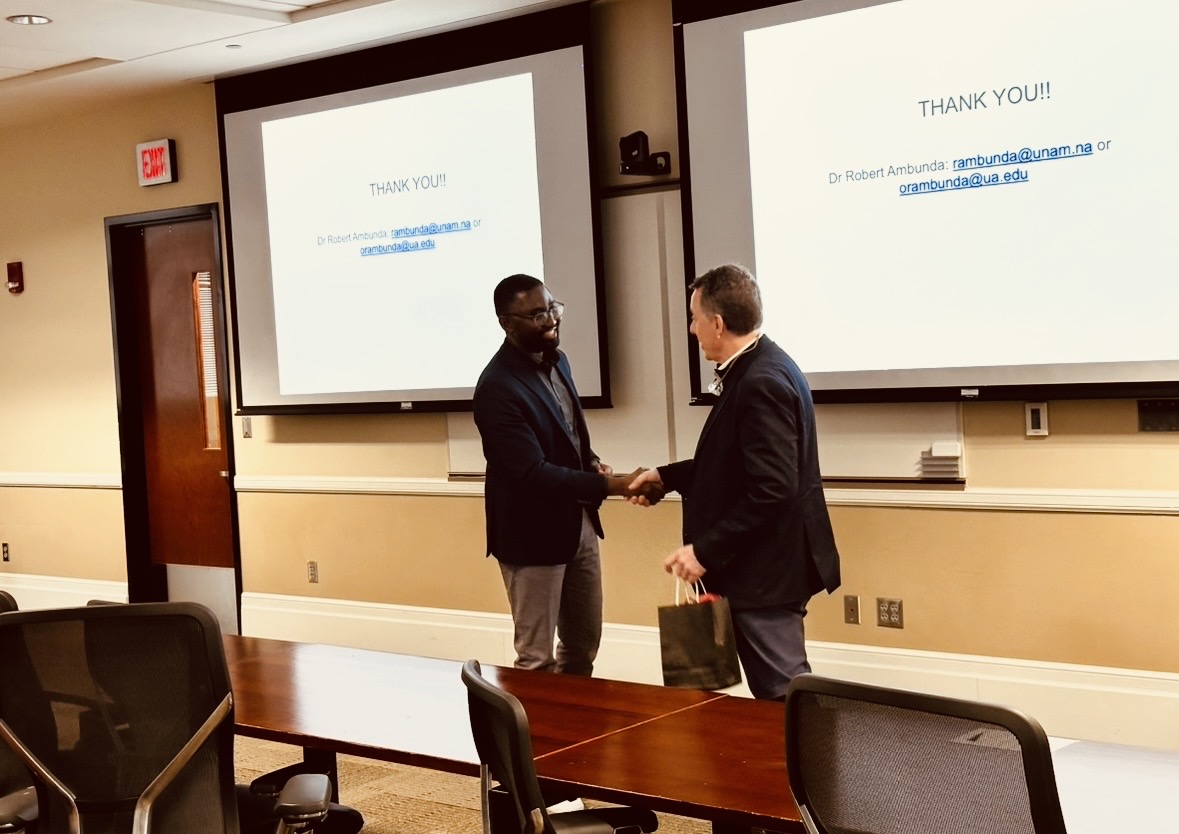
Earlier this year, as part of his Fulbright engagement, Dr Ambunda delivered a public seminar titled “Building Safer, Greener and More Inclusive Transport Systems: A Global South Perspective” to faculty members, students, postdoctoral researchers and the public in Alabama.
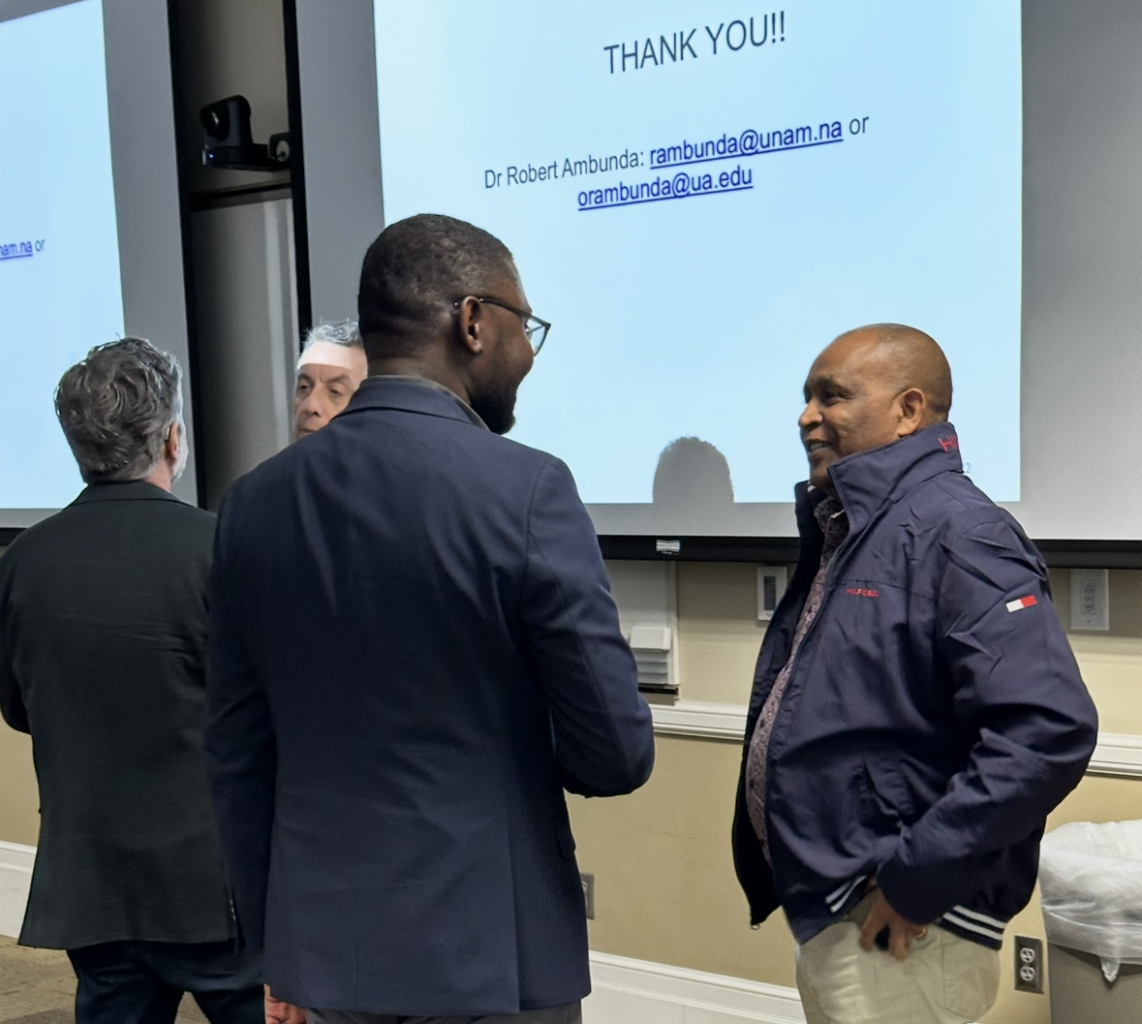
By pairing Namibian data with comparative analysis from Alabama in the United States, Dr Ambunda is identifying where systems fail and where they can be improved.
“This comparative Global North–Global South approach allows me to analyse how transport safety challenges in Namibia compare with those in the United States, and how lessons from each context can inform better active mobility policy and infrastructure design.” The result is not a copy-and-paste model from abroad. It is what he calls policy-relevant, context-sensitive insights and solutions designed specifically for Namibia’s realities.
His research goes beyond accident reduction. It also examines how transport infrastructure can respond to climate resilience, sustainability and equity challenges. In many communities, people walk long distances in extreme conditions. Flood-prone roads become dangerous during heavy rains. Informal settlements expand without safe pedestrian infrastructure.
When roads fail, access to schools, clinics and jobs becomes a matter of risk. Dr Ambunda’s work argues that transport infrastructure must be designed not just for efficiency, but for protection.
Elevating Namibia to the global stage
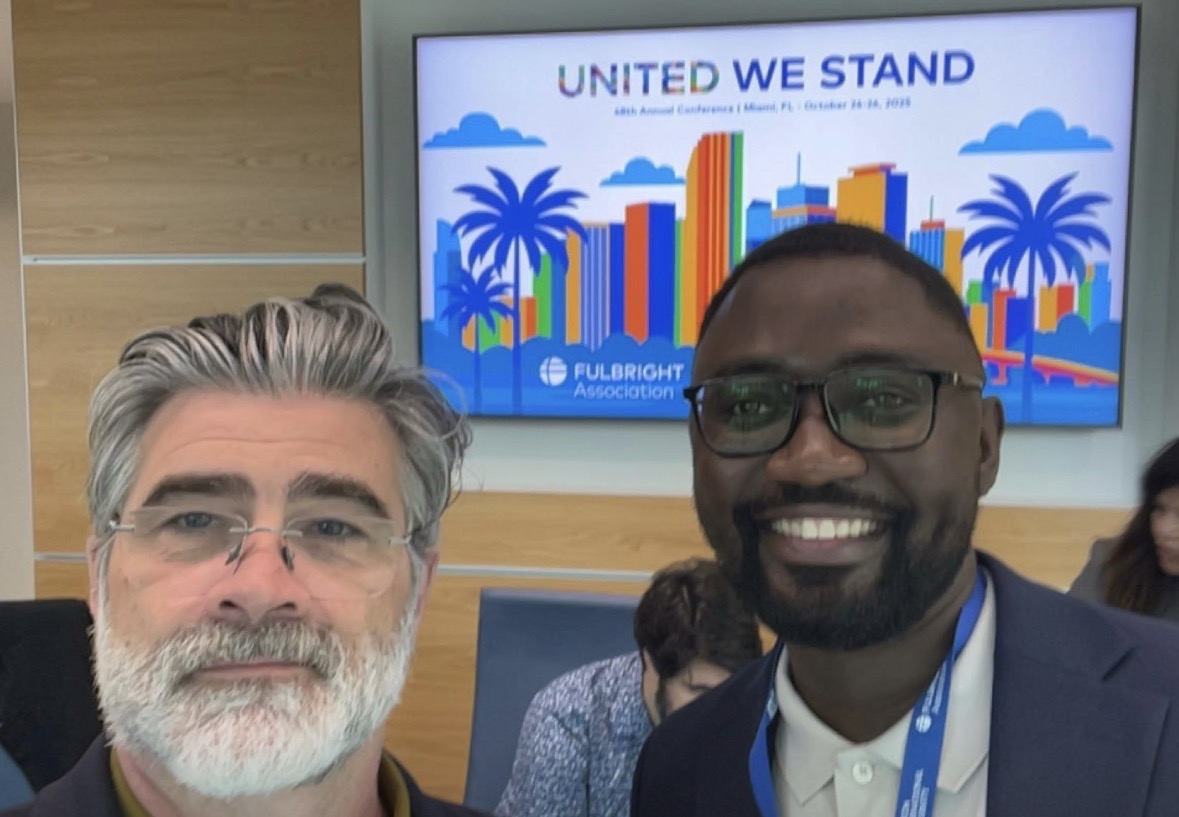
Through his Fulbright engagement, Dr Ambunda has strengthened partnerships with leading institutions, including the Alabama Transportation Institute, the Centre for Sustainable Urban Development at Columbia University, and City College of New York. Yet the value of this experience extends beyond technical exchange.
“The Fulbright experience has not only advanced my technical research but has also aided me in positioning UNAM as a key contributor to global transport debates,” he says. In doing so, Namibia’s realities are no longer viewed as developmental deficits, but as sources of globally significant knowledge.
What this means for the ordinary Namibian
If implemented, Dr Ambunda’s research could influence how roads are designed, where crossings are placed, how speed is managed, and how safety data informs national policy. It could mean: Fewer pedestrian deaths, safer routes to school and climate-resilient road upgrades.
In a country considered to have the best roads in Africa where thousands walk daily, a shift in design could save lives. As Namibia continues to modernise its infrastructure, Dr Ambunda’s research offers a timely reminder that development should be measured by the safety of people.