


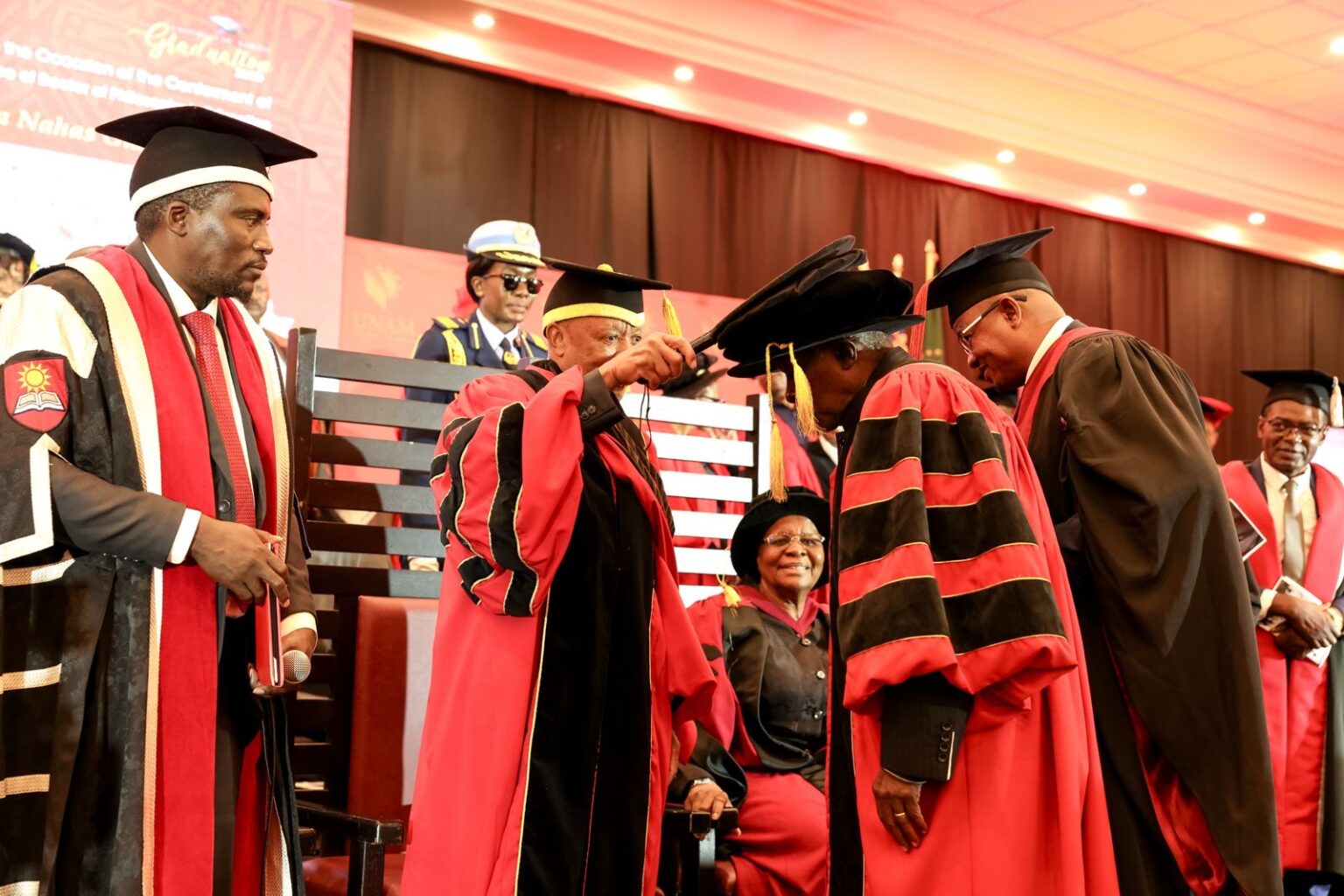
The atmosphere at the University of Namibia’s graduation ceremony on 29 April 2026 was one of reverence and reflection – an occasion not only to celebrate academic achievement, but to honour a man whose fingerprints are etched into the very foundation of Namibia’s education system.
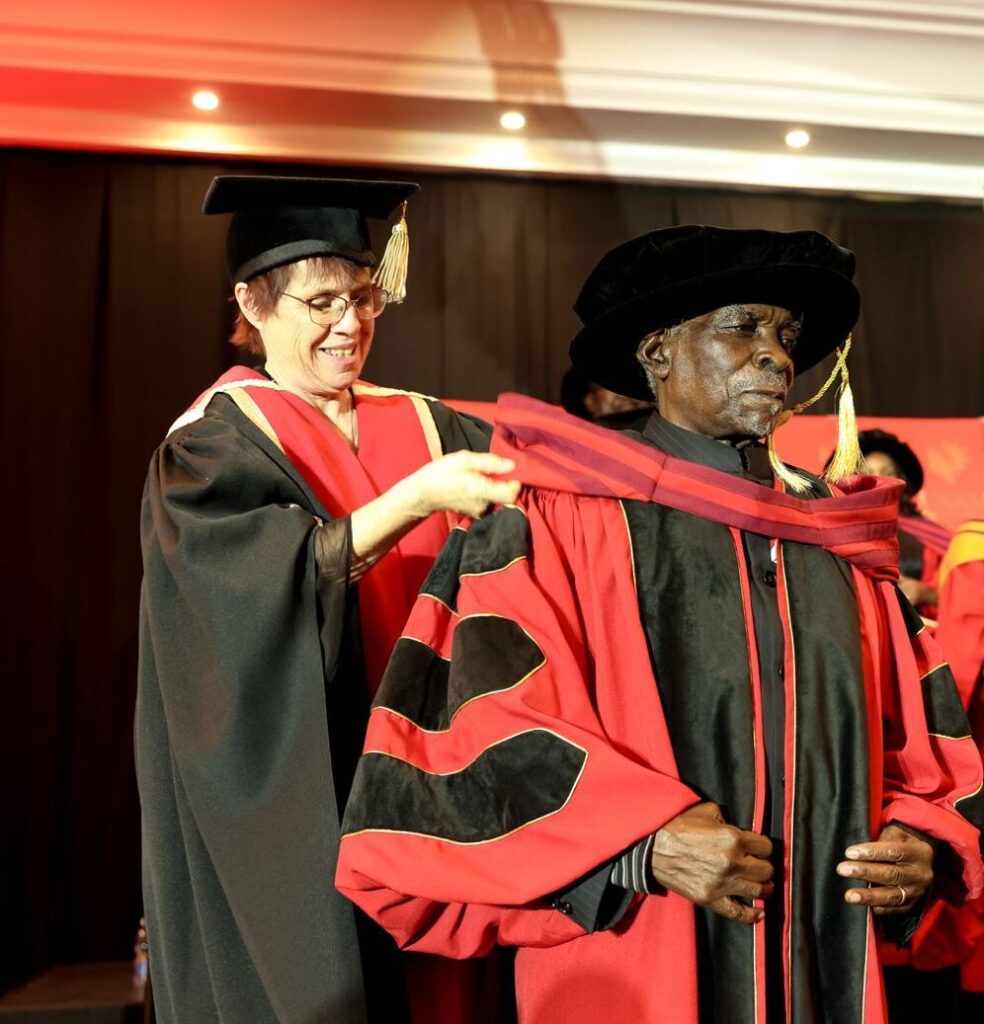
As the University conferred an Honorary Doctorate of Philosophy in Education (Honoris Causa) upon Rt. Hon. Nahas Angula, the moment carried a profound sense of historical continuity.
Here stood Namibia’s first Minister of Education, a key architect of the nation’s post-independence learning framework, being recognised by the very institution born from that vision.
In his acceptance address, Mr Angula did not dwell on accolades. Instead, he turned the audience’s attention to purpose noting: “We are witnessing progress and we must continue that progress”.
He revisited the original mission of the University of Namibia, established in 1991 following Cabinet’s adoption of Professor John Taylor’s report on higher education.
Mr Angula spoke with clarity and conviction, outlining the institution’s foundational pillars: to serve as a repository of knowledge, to educate and prepare students for life’s pathways, to generate new knowledge through research and innovation, and most critically, to engage communities through meaningful outreach.
It was this final pillar that anchored his reflections: “Our communities are faced with myriads of social and economic challenges: food insecurity, housing, sanitation, diseases and high infant mortality as a consequence of malnutrition,” he noted, grounding his speech not in abstraction, but in lived reality.
He challenged the university to sharpen its focus on food security, calling for deeper research into soil fertility alongside ongoing innovations such as seed development.
Beyond agriculture, he pointed to pressing national concerns: inadequate housing, poor sanitation, persistent disease, and alarmingly high rates of infant mortality linked to malnutrition. He called on graduates to tackle these issues.
The speech was not merely reflective, it was a call to action by a man whose vision has helped shape Namibia’s education system.
In her address, Her Excellency Dr Netumbo Nandi-Ndaitwah, President of the Republic of Namibia, spoke warmly about Nahas Angula as one of the foremost architects of Namibia’s education system, tracing his impact from his role in exile as SWAPO’s Secretary for Education to his leadership as the country’s first Minister of Education and later Prime Minister.
Reflecting on his enduring influence, she remarked that for those who have witnessed his work firsthand, “one cannot delink Namibian education from him.”
She further commended the University of Namibia for conferring the honorary doctorate, describing the recognition as both fitting and earned – an acknowledgement of Angula’s lifelong contributions to education before and after independence.
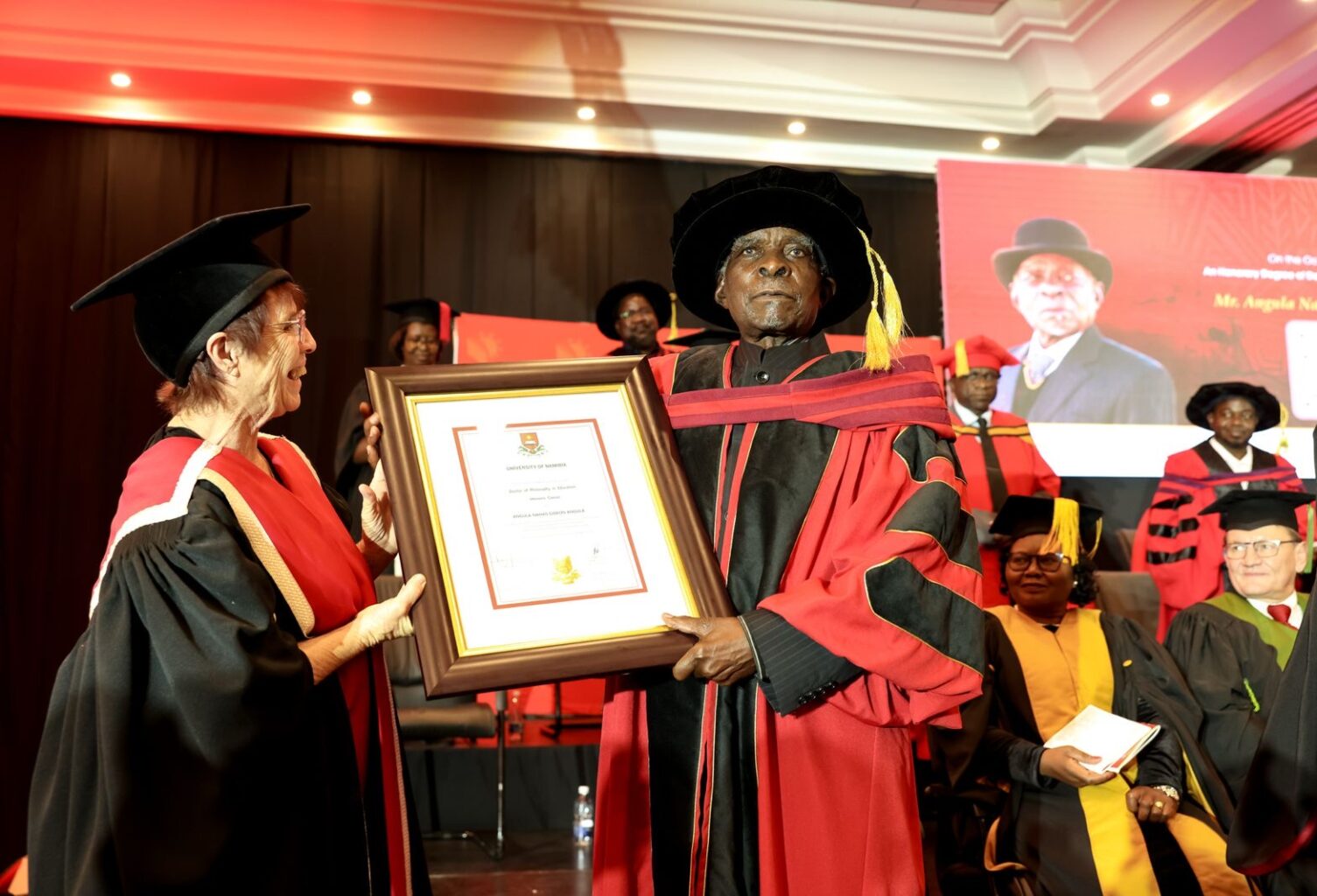
The Vice-Chancellor, Prof. Kenneth Matengu in his citation spoke emphatically about Dr. Anngula’s early childhood, pursuit of education, political life, contributions to education and human development.
He noted: “In honouring Mr Nahas Angula, we honour the enduring truth that education is the foundation upon which democracy stands, dignity is restored and development becomes sustainable.
We honour a leader who chose classrooms over comfort, who chose institution-building over personal acclaim, who chose service over status and who placed the future of the Namibian child above his own academic advancement,” said Prof. Matengu.
In a deeply humbling moment, Dr Angula shifted the spotlight away from himself, accepting the honour on behalf of the many educators, colleagues, and compatriots with whom he worked both in exile and within Namibia’s Ministry of Education, where he dedicated 15 years of service.
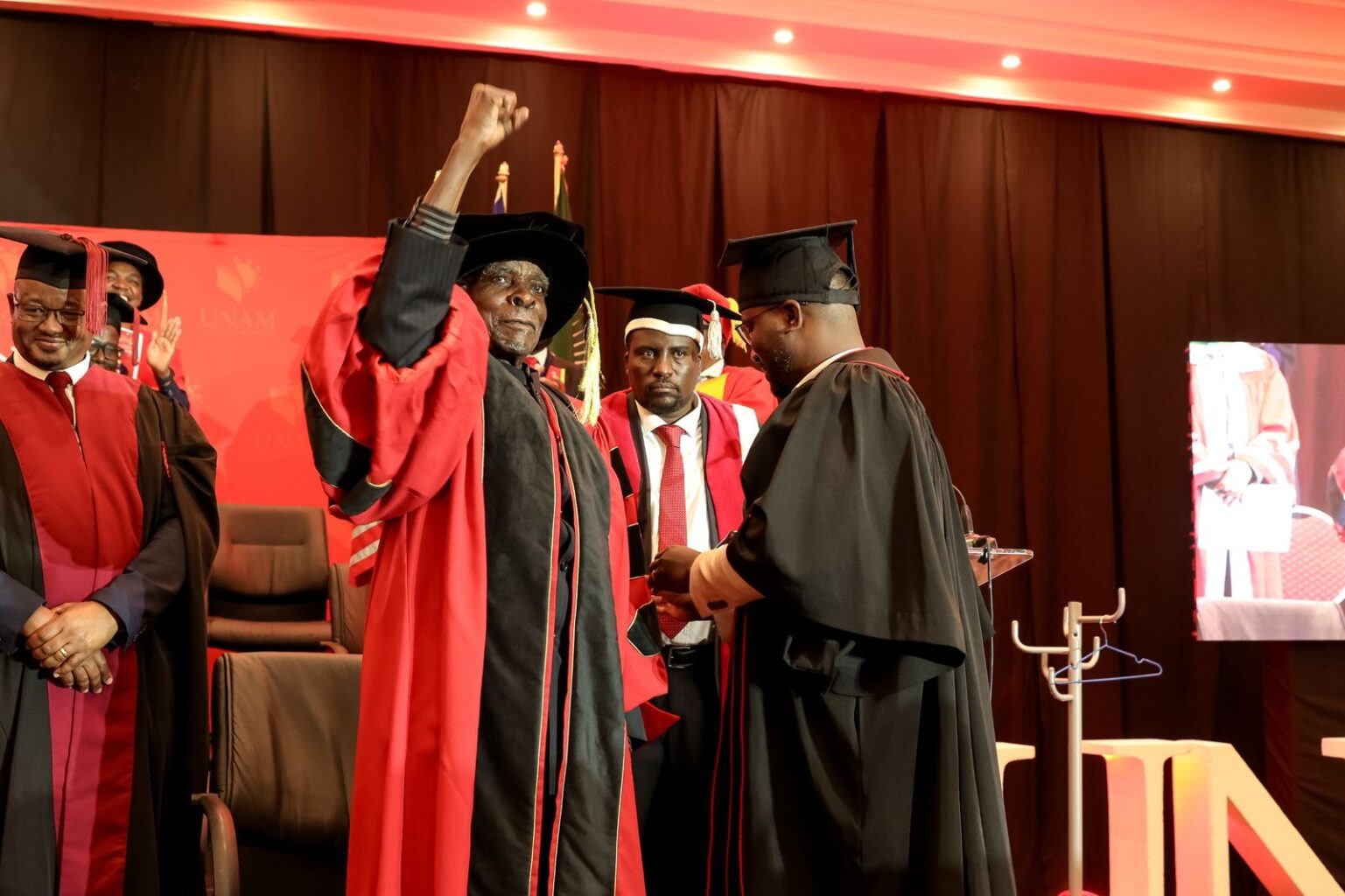
In honouring Dr Nahas Angula, the University of Namibia not only celebrated a life of service, but reaffirmed its commitment to the transformative power of education.
As graduates celebrated their own academic milestones, the ceremony served as a powerful reminder of the broader purpose of education.