


He had never been on a plane. He could barely say good morning. He knew no one. And he had just crossed half a continent to enrol at a university he had only ever seen on a screen.
Lauro Catarino Rocha De Almeida, 22, from the tiny island nation of São Tomé and Príncipe, tucked in the Gulf of Guinea off the west coast of Central Africa, is graduating this year as the very first student from his country to ever study at the University of Namibia. His story is not just one of personal grit.
It is a story about what a university can be, when it decides to be more than a process.
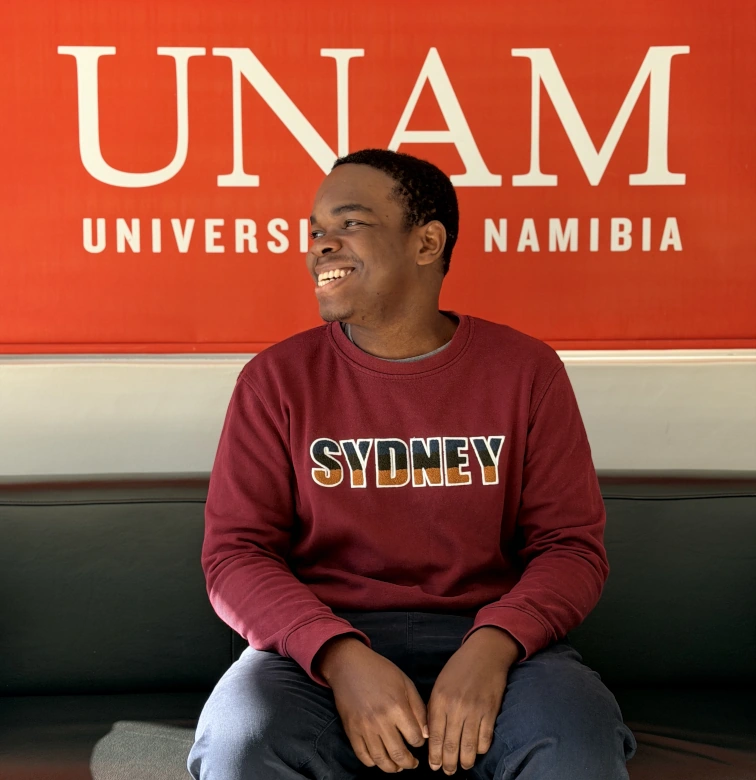
Namibia is a country that tends to surprise people. Vast and largely untouched, it is home to the oldest desert on earth, some of Africa’s last great wilderness, and – tucked in the capital, Windhoek – a university that in 2026 counts students from 44 countries on its rolls, from Finland to the Philippines, from Bangladesh to Burundi. It is a university quietly building a global identity.
Lauro did not know much of this when, in early February 2023, he and his mother boarded a flight from São Tomé, an island of just over 200,000 people, bound for a country neither of them had ever visited.
The journey was long. São Tomé to Angola. Angola to Namibia. Two people navigating airports in languages they did not speak, with a registration confirmation email as their only compass.
When they finally stood in front of UNAM’s Administration Building, Lauro’s English, the product of a Level 4 diploma taken in a country where Portuguese is the mother tongue, was enough to read a sign, but not enough to ask for directions.
“It was my first time on an airplane. We were talking on the way about what life would be like in a totally different country, with different cultures and history.”
At the Admin Building, they found Dr. Aune Sam, then the Senior International Student Coordinator at UNAM, now a Lecturer in Applied Educational Sciences at the University. She was heading into a meeting. She asked them to wait.
When she returned, what she found was a young man and his mother communicating largely through sign language and a cell phone translation app, carrying a situation that was about to become complicated: the course Lauro had applied for – medicine or engineering – was no longer available. The registration window was nearly closed.
And the new Bachelor of Science in Ecology & Biodiversity Conservation, a programme being offered for the very first time that year, still had a place.
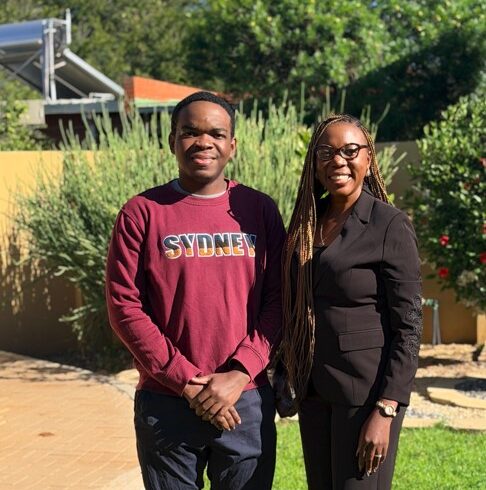
“You could see the tears in the mother’s eyes when they were told the course they initially wanted was not available. It was heartbreaking to consider sending him back home when we had other options. A listening ear can open closed doors.”
Dr. Sam did not send them away. She called in an Angolan student, Claudia, to translate. She walked them to the Faculty Officer of the School of Science, Mr. Kalonda Simasiku, and then to the Associate Dean, Professor Veikko Uahengo.
After an hour of discussion, Lauro was registered, a little behind his classmates, navigating an entirely new field, in an entirely new language, in an entirely new country. He started anyway.
The days that followed were, by Lauro’s own account, the hardest. Hostel life was unfamiliar. The streets were unfamiliar. The food, the sounds, the social rhythms, all of it was new.
Then, one afternoon at Dr. Sam’s office, Lauro met Petersen Nghiyoonanye, at the time a senior student and, in 2024, the SRC’s Secretary for External Affairs.
“He seemed a bit shy, confused, and unsure of what was next. I thought he was super antisocial at first, but I knew genuinely he was calm and open-minded, and just open to learn.”
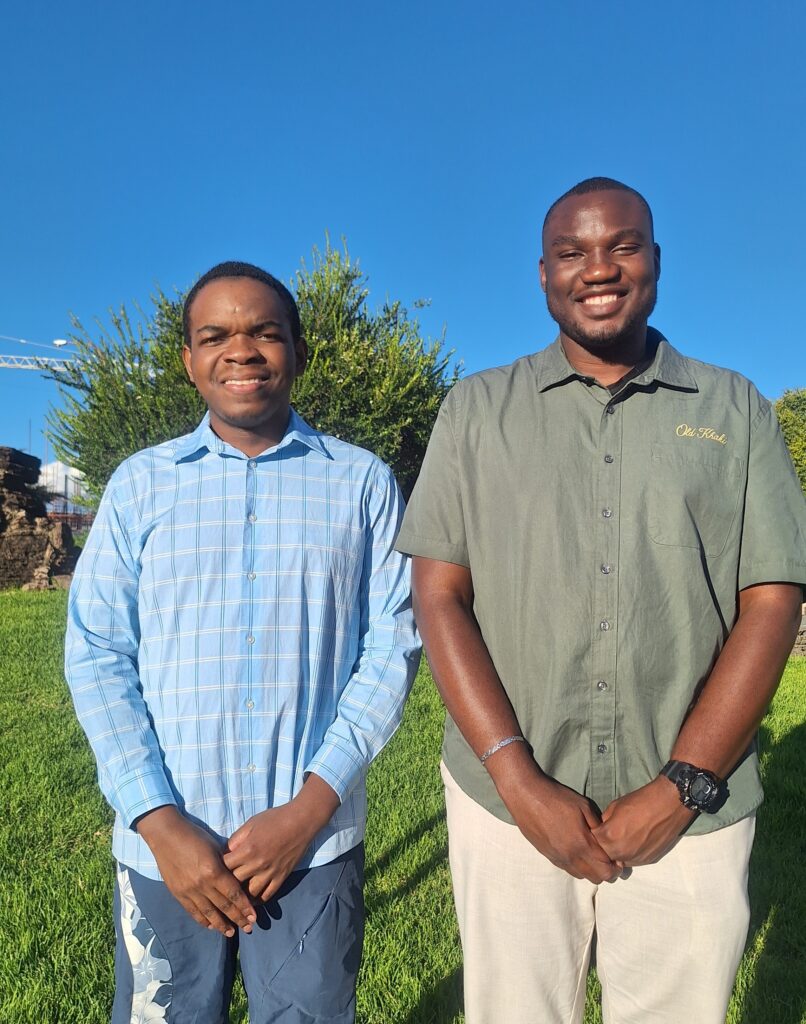
Petersen, who is half-Angolan but grew up in Namibia and speaks no Portuguese, found another way in. The two traded languages: Lauro practising English, Petersen picking up Portuguese phrases, as Petersen walked him through hostel protocols, local streets, university timetables, and the unspoken social codes that no orientation brochure ever covers. He calls it giving Lauro “the whole startup pack.”
“I was also once a stranger. I had a loving community that reached out to me. My passion to assist others grew from that. Just having humanity before anything.”
Lauro went on to pass every module in his degree – no small feat for a student who started classes already behind, in a language he was still learning, on a programme that had no past exam papers to reference because no student had ever sat it before.
He was not just part of UNAM’s first cohort in Ecology & Biodiversity Conservation. He was its first student from an entirely new country on the University’s map.
“I felt honoured, and worried. There were no past test papers to take reference from. It was just you, your lecturers, books, and research.”
The discipline suits him. São Tomé and Príncipe, a former Portuguese colony straddling the equator, is one of Africa’s most biodiverse nations, home to rare endemic species found nowhere else on earth. Lauro intends to take what he has learned back home.
His priority: marine conservation and deforestation, both urgent on islands where the ocean and the forest are not scenic backdrops, but the engine of an entire ecosystem.
“Marine resources are not infinite. If not managed well, they may disappear, along with the endemic species that depend on them.”
For Dr. Sam, the deeper lesson of Lauro’s journey is institutional. Universities, she argues, often speak about international students in terms of numbers, diversity figures, and enrolment statistics, while underestimating the emotional architecture that determines whether those students stay, thrive, or quietly disappear.
“The student should never be thrown in the ocean to either swim or drown. They must be made to feel appreciated and accepted, to feel at home while navigating their new environment. The support must be holistic, not just academic.”
It is a call that echoes Petersen’s own experience as a student leader, one who watched classmates question Lauro’s accent, and some mock it, while Lauro kept walking up to the next person until his message got through.
“He never stopped talking because of the language barrier. He made sure his messages were delivered. The resilience is epic. We need to develop real cross-cultural literacy programmes at this university.”
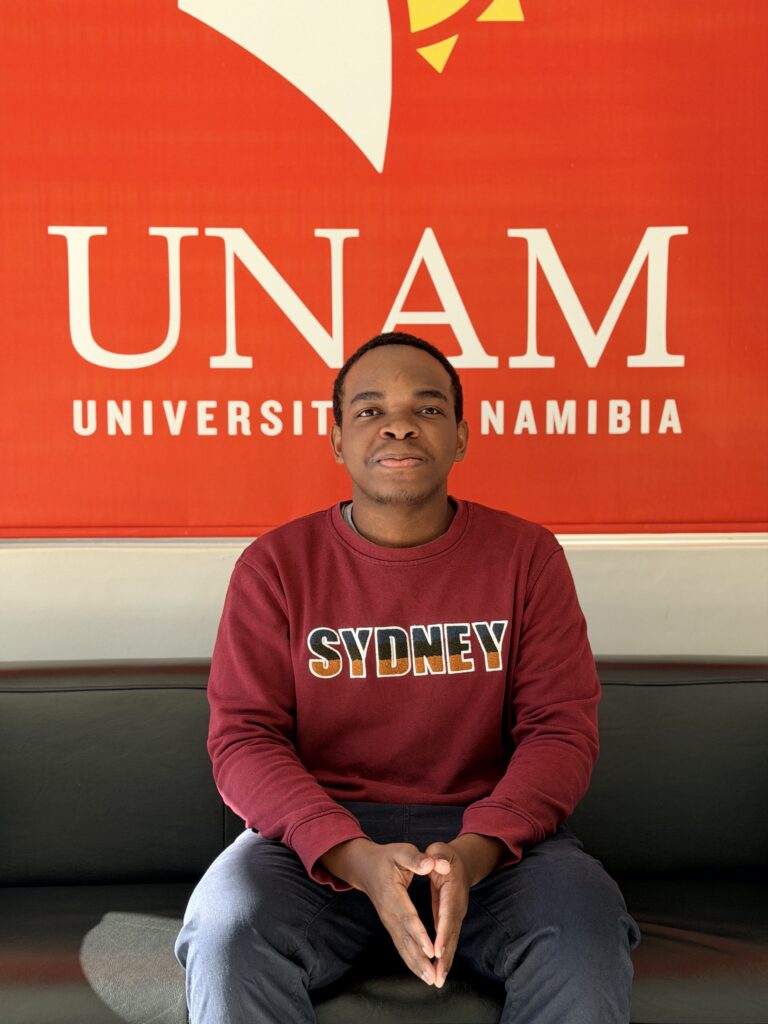
Lauro is now pursuing his 1-year Honours degree in Ecology & Biodiversity Conservation (NQF Level 8) driven, he says, by a scientist’s instinct to keep going further, to find solutions to problems. Asked what he would tell the younger version of himself who stood outside that Administration Building, uncertain and silent, he does not hesitate.
“Do not give up.”
For Dr. Sam, who has since moved into the lecture hall but still carries the belief that shaped her years in student support, Lauro’s graduation is proof of a simple principle: that a university willing to listen, adapt, and assign one caring human being to walk alongside a stranger can change the trajectory of a life – and, in time, of an island.
“Lauro is a perfect example of a journey that will attract more students from his country. This is a student who never gave up because the system allowed him to succeed. UNAM is the place for all students, and this is the UNAM we all want.”