


“So happy for my students. Another scientific exposure with the experts in a foreign country, thanks to the University of Namibia, Bremen University, the ERASMUS programme of the University of Bremen, and the German-African Innovation Incentive Award (GAIIA).”
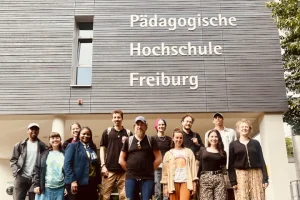
That is how Prof. Lydia Ndinelao Horn summed up a two-week trip to Germany, where she and 2 of her research students took part in the IoT AgriConnect Summer Camp 2026, hosted by the University of Bremen from 17 to 28 August 2026.
The camp, part of the wider AgriConnect project, connects information technology with sustainable farming. Participants worked through three technical tracks: sensors and data acquisition to monitor crop health; machine learning for precision farming; and the responsible use of artificial intelligence (AI) in food systems.
For the UNAM team, the camp was a chance to link these tools to the field research they are already doing at home. Mr. Atanasius Haingura Siwogedi, a first-year MPhil student in Microbiology and Biotechnology in UNAM’s School of Science, gained practical skills in isolating and analysing root-nodule bacteria from Bambara groundnut grown in Namibian soils. “The experience deepened my understanding of how beneficial soil bacteria can improve crop production, soil fertility and food security while supporting sustainable agriculture in Namibia,” he explained.
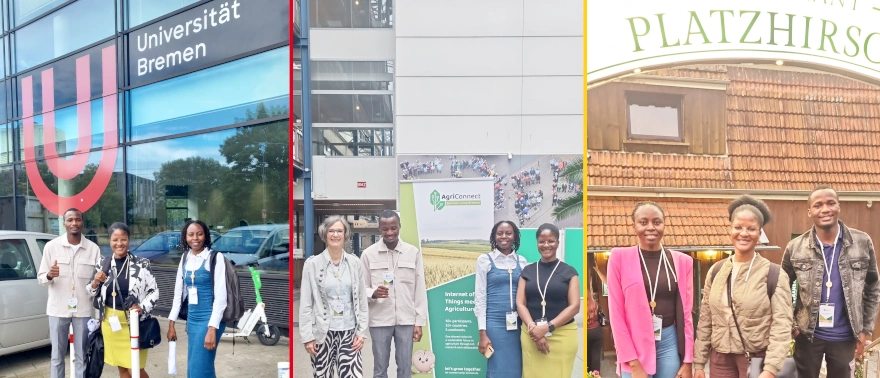
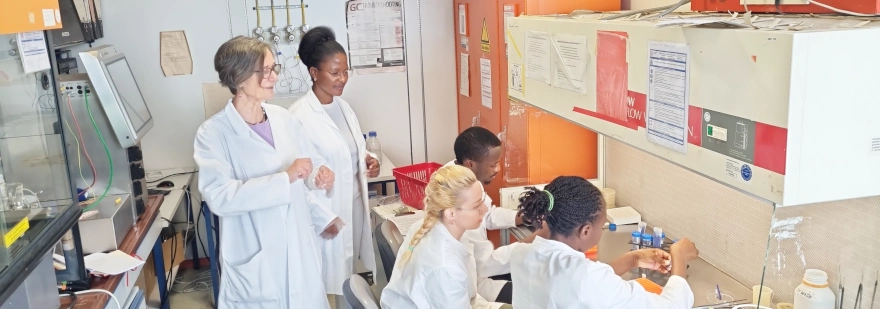
For Ms. Eufenia Arexander, an MPhil candidate in Crop Science based at UNAM’s Ogongo Campus, hands-on training in DNA extraction, PCR and sequence analysis was a first. “My recent research at the University of Bremen completely opened my eyes to the world of microbiology and molecular biology. Now, I am incredibly eager to bring these skills back home,” she shared.
The visit grows out of a long-standing partnership between Prof. Horn and Prof. Dr. Barbara Reinhold-Hurek of the University of Bremen. In 2024, the pair received the third German-African Innovation Incentive Award (GAIIA) from Germany’s Federal Ministry of Education and Research, worth up to €150,000 (about N$2.9 million).
Their project, “Advancement of the Namibian Agricultural Production Systems through Inoculants for Nutritious Food Practices Using Bambara Groundnut”, centres on Bambara groundnut (Vigna subterranea), a protein-rich, climate-resilient African legume. By introducing regionally adapted biofertilisers and beneficial bacteria, the team aims to raise yields, combat malnutrition and stunting, and secure food sovereignty for small-scale farmers in northern Namibia.
“Our partnership with UNAM has always been about building capacity on both sides. Seeing the Namibian students apply new digital tools to their Bambara groundnut research and learn modern genetic techniques in our lab to characterize the Namibian soil bacteria, shows how this collaboration can grow into lasting solutions for smallholder farmers,” reflected Prof. Reinhold-Hurek.
For UNAM, the exchange gives students direct access to international experts and emerging technology, helping to close the gap between laboratory research and field application. “Our students work with Bambara groundnut farmers in northern Namibia to bring research out of the lab and journals to the field and improve production. In Bremen, they saw how sensors and data can tell us what is happening in the soil and the crop as it happens. That is how we bring the laboratory to the farmer’s field,” explained Prof. Horn.
The exchange was supported by the German Academic Exchange Service (DAAD, ERASMUS) and the GAIIA grant.