


Long before most Namibians reach a pharmacy counter, many have already turned to roots, barks and herbal preparations passed down through generations. The two systems of healing, traditional and conventional, have coexisted for years, largely without formal dialogue between them. The UNAM School of Pharmacy set out to change that.
Closing the gap between two systems
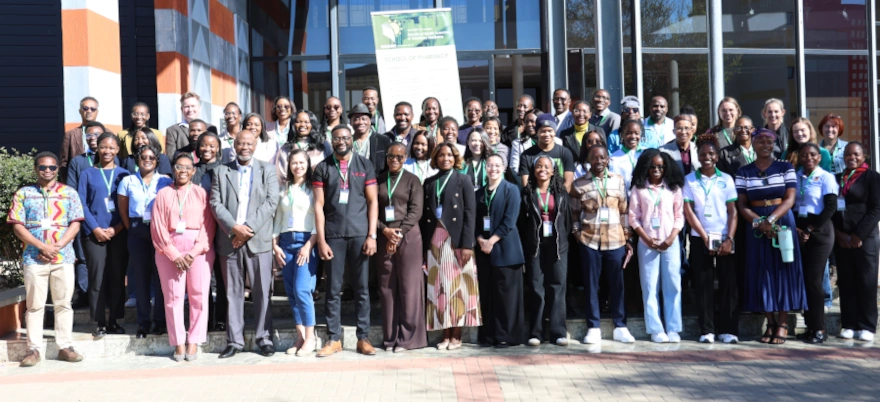
The school hosted a one-day workshop, “Promoting Safety and Efficacy in the Use of Complementary and Traditional Medicines,” bringing together regulators, traditional health practitioners, academics and students to confront a pressing question: how can traditional and complementary medicines, already widely used across the country, be integrated safely alongside conventional healthcare?
Dr Boni Singu, Dean of the School of Pharmacy, framed the challenge plainly in his welcome remarks. “The question before us is not whether these practices exist. They do,” he said. “The important question is: how do we ensure that the public benefits from them while being adequately protected from preventable harm?”
For Singu, the aim was not to choose between systems of knowledge but to connect them, work he said depends on cooperation between government agencies, regulators, practitioners, healthcare professionals, academics and local communities.
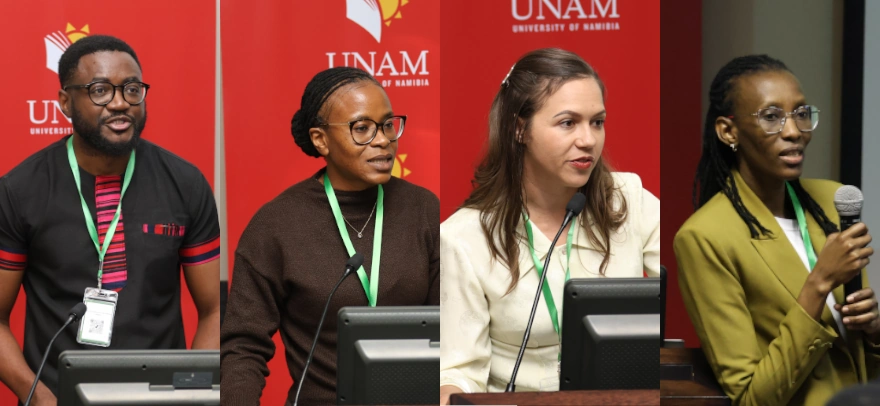
Prof Petrina Kapewangolo, representing the Office of the Pro-Vice-Chancellor for Research, Innovation & Development, opened the session by describing traditional medicine as a legitimate field of scientific inquiry when paired with proper rigour and regulatory safeguards. “Complementary and traditional medicines hold a vital place in many communities,” she said. “They are linked not only to cultural heritage and longstanding knowledge but also to livelihoods, natural resources, research opportunities, and growing commercial and pharmaceutical interests.”
Building a platform, not just a panel
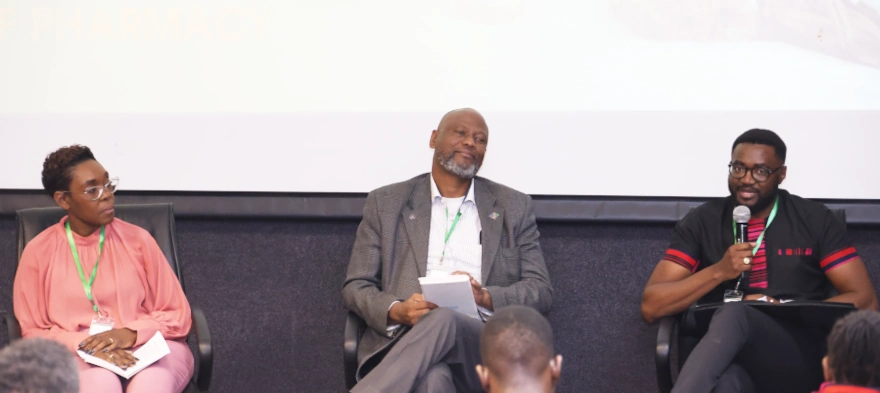
The day combined discussion with practice: a panel on building a roadmap for integrating traditional medicines into mainstream healthcare, alongside demonstrations on formulating herbal tablets and capsules.
For pharmacists in training, the task now is translating generations of inherited knowledge into scientific language, and showing that Namibia’s oldest medicine cabinet has a place in its newest curriculum. Organisers have agreed to hold the workshop annually, turning a single day into an ongoing platform for exchange between regulators, practitioners, researchers and communities.
The workshop was held on 18 August 2026.