


For many, a Master’s degree represents personal ambition and academic growth. But for Josua Amukwaya, it is much more, it is a testament to resilience, self-belief, and a deep commitment to the inclusion of persons with disabilities in Namibia’s development agenda.
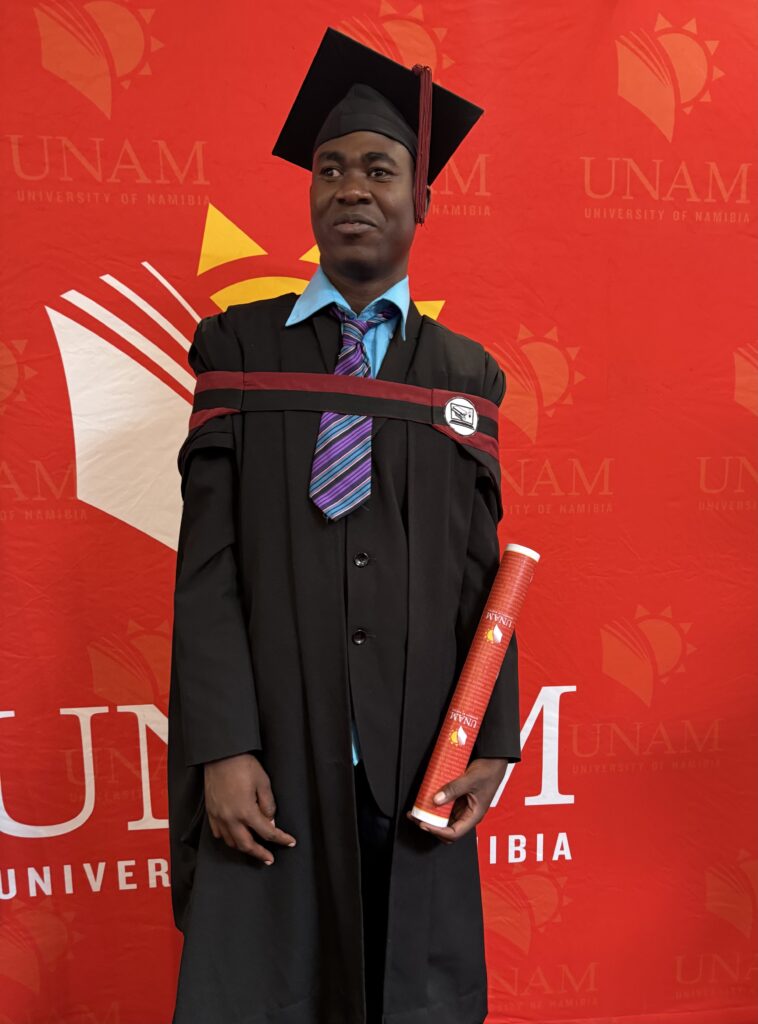
At UNAM’s Spring graduation ceremony on 08 October 2025, Joshua crossed the stage not only as a scholar of distinction but as a symbol of perseverance. Despite being visually impaired, he earned his Masters of Adult Education, completing his studies in record time and conquering barriers most can only imagine.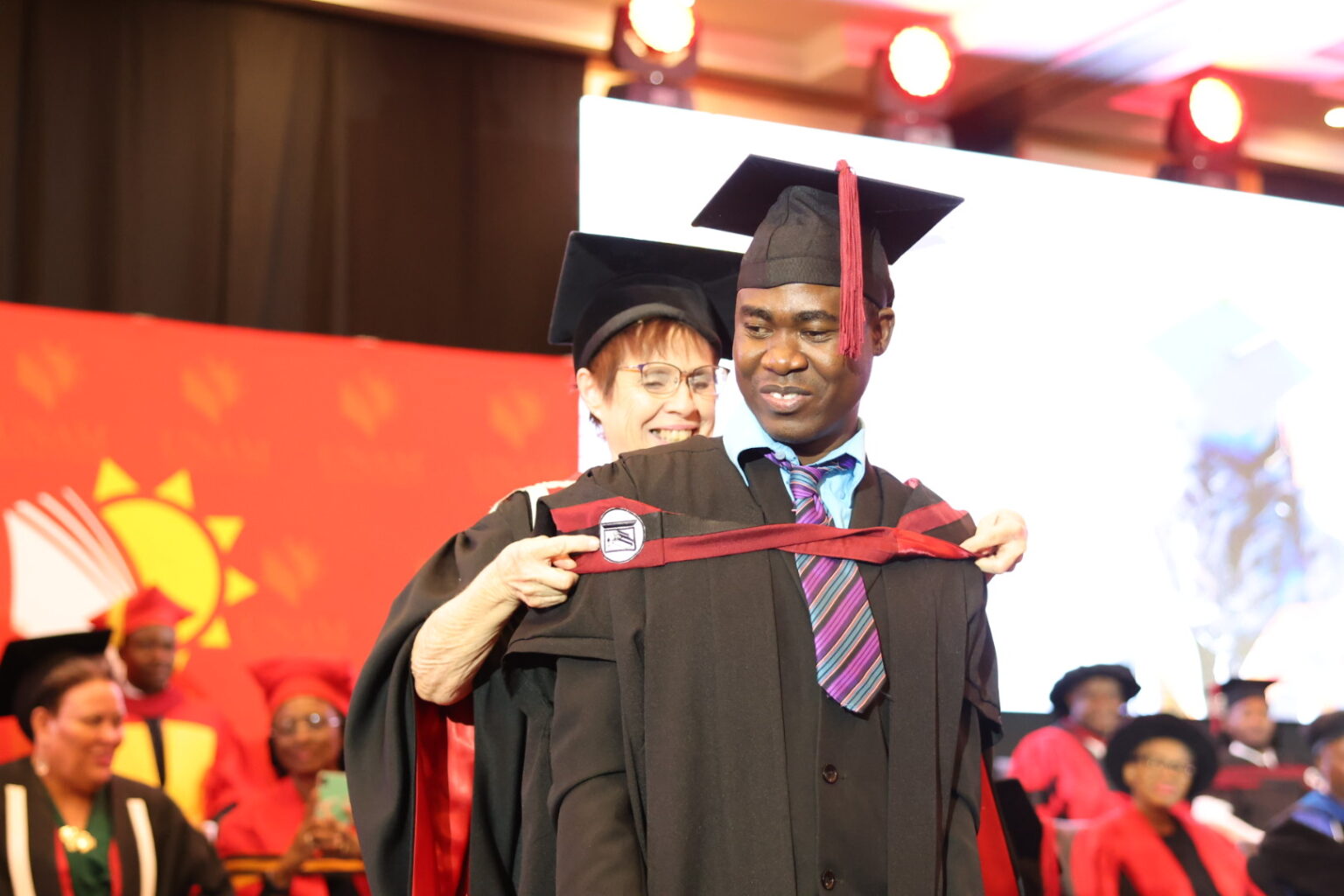
A journey fueled by purpose
“When I started, it wasn’t easy,” Joshua recalls. “The beginning is always a challenge. But I have a mindset of achieving what I set out to do, so I never gave up.”
Josua began his postgraduate journey in 2023, completing his coursework that same year and advancing to his research. His thesis focused on a critical yet often overlooked issue — developing guidelines for accessibility and safety education for persons with disabilities in Windhoek’s public transport system.
“I wanted to explore how persons with disabilities access safety information in public transport and whether buses are truly accessible and safe for everyone,” he explained. “It’s an area that directly affects our independence and dignity.”
Finding opportunities in challenges
Josua’s academic path has not been without obstacles. He started his education at the School for the Visually Impaired, where resources such as Braille notes and specialized support were available. But advancing to high school at the Windhoek Technical High School came with a new set of challenges.
“In high school, teachers didn’t know Braille or how how to properly assist learners with visual impairment,” he said. “Imagine sitting in a math class where the teacher says, ‘this plus this equals that,’ and you can’t see the board. It was difficult, but I soldiered on.”
At UNAM, the struggle continued in the early years, he used a Braille machine to write exams, but results took longer to process since they needed to be converted from Braille. “So, I decided to learn how to use a computer keyboard,” Joshua shared with a proud smile.
Using assistive technology and screen-reading software, he began typing, taking tests, and completing assignments on time. He soon after started using a voice recorder to capture lectures and later transcribed them into notes. “It wasn’t easy, but I found ways to adapt,” he said.
Learning, Working and Advocating
While pursuing his Master’s, Joshua was also working full-time, a balancing act that tested his endurance.
“It was tough to balance work and school. I’d knock off work and attend evening classes at six. The good thing is that classes were online, but even then, managing feedback from supervisors and keeping up with research demands was not easy but still I pushed through,” he explained.
Today, Joshua works as an advocate for persons with disabilities, focusing on ensuring that no one is left behind. His work involves promoting disability inclusion in education, health and employment.
“This achievement is not just mine,” he said firmly. “I did it for my community – for every person with a disability who’s been made to feel like their dreams are impossible. I also did it for my family, especially my uncle and aunt, who always supported and believed in me.”
A Message of Hope
When asked what message he has for others with disabilities who may feel limited by their circumstances, Joshua’s response was powerful:
“Believe in yourself. If the enemy of disbelief is inside you, you’ll never go anywhere. But if it’s outside, it can’t harm you. Your disability is not the limitation, your mindset is. Anything is achievable as long as you believe and commit to it.”
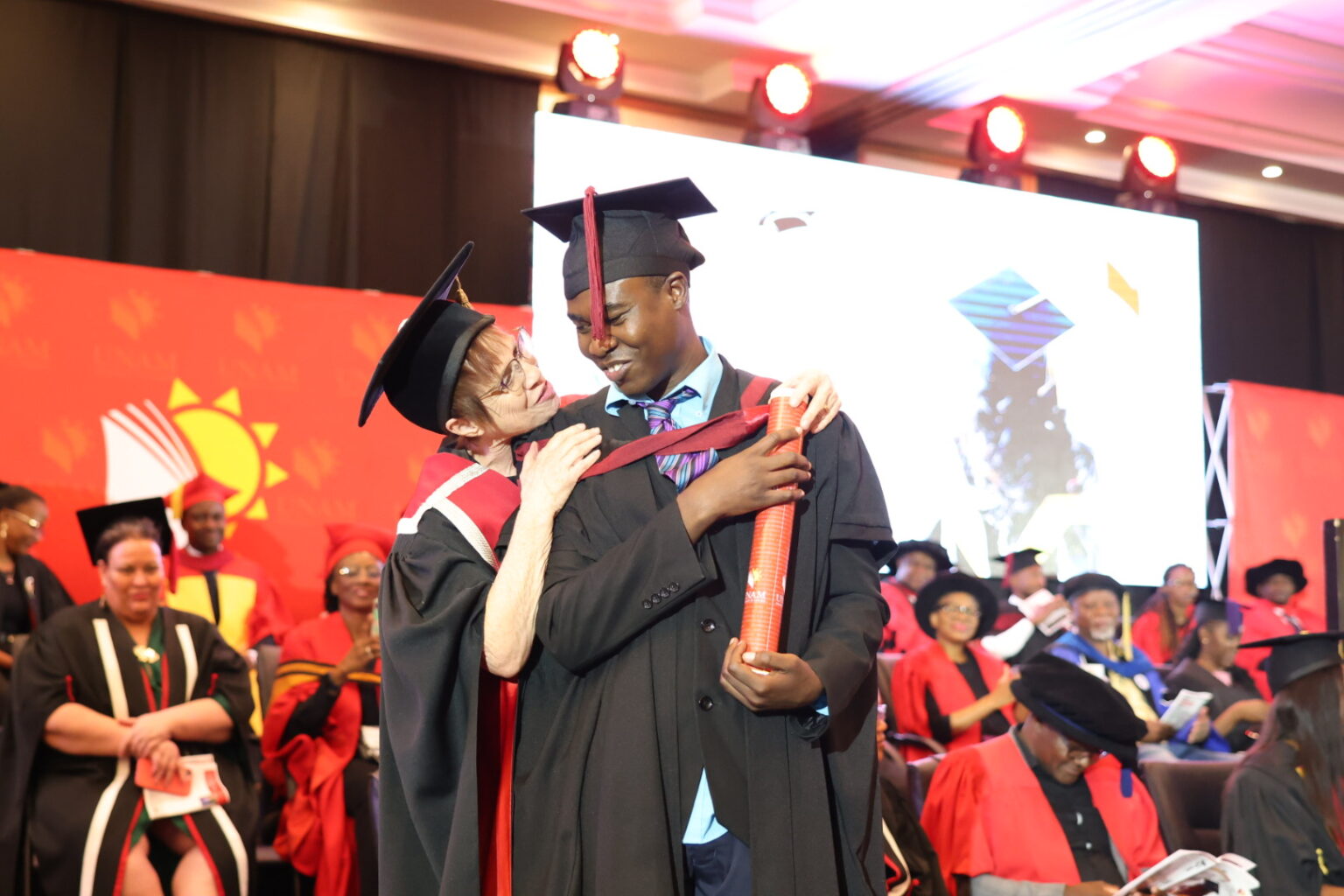
So, what’s next for Joshua Amukwaya?
He laughs softly. “I’m still thinking about it. Being called Dr. Amukwaya sounds nice,” he admits. “I might pursue a PhD or another postgraduate qualification in a different field. But above all, I want to continue advocating for persons with disabilities to ensure policies and systems in Namibia and beyond are inclusive.”
Joshua’s story is not merely one of academic success; it is a story of courage, a reminder that resilience, self-belief, and purpose can illuminate even the darkest paths.
Joshua says, “The sky is not the limit. Your mindset is.”