


UNAM is taking bold strides on the global stage through a dynamic partnership with the Max Planck Institute for Evolutionary Anthropology in Leipzig, Germany, through an innovative student exchange and research partnership.
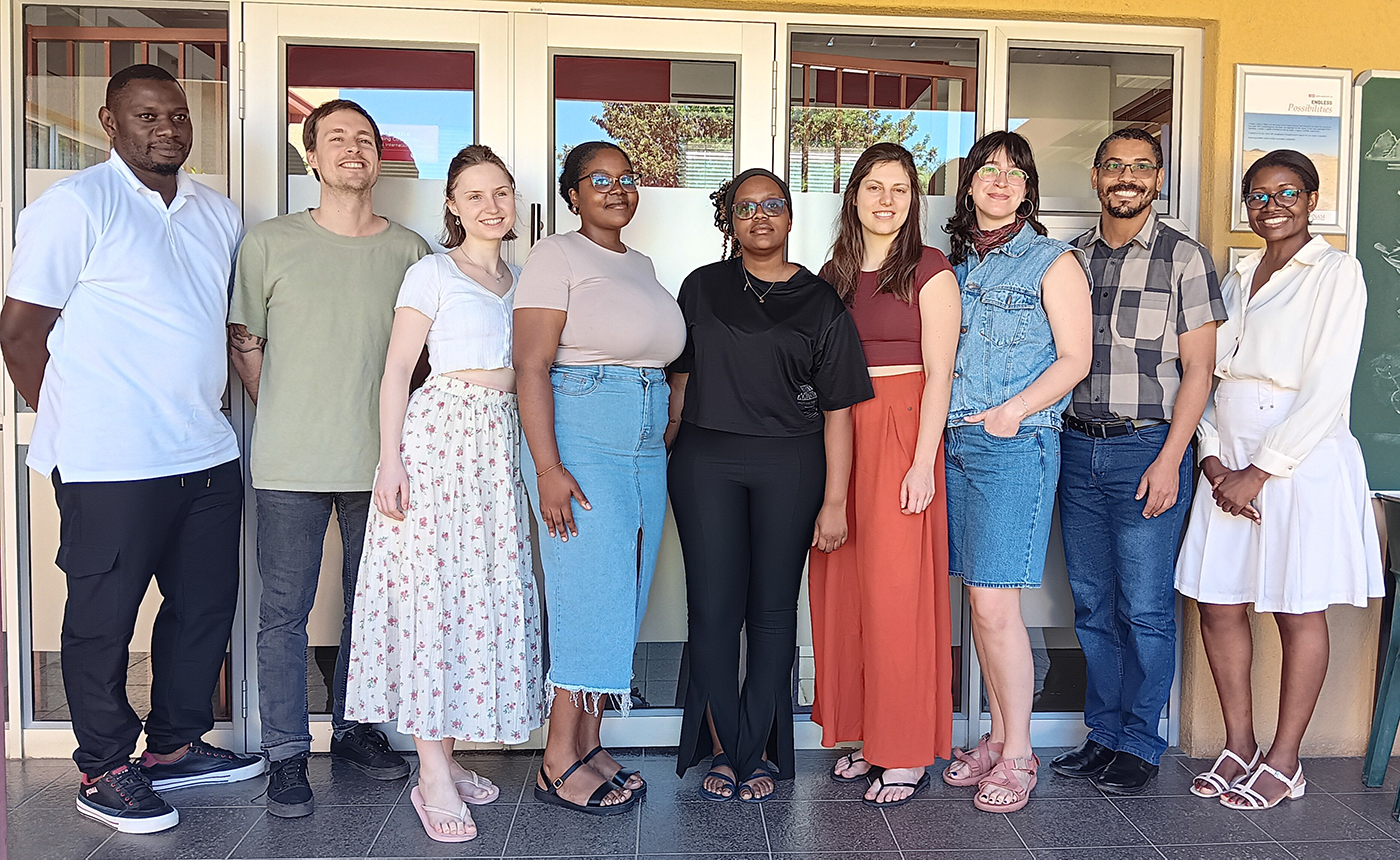
This initiative, funded by the Max Planck Förderstiftung, brings together Namibian and German scholars to tackle critical challenges in early childhood developmental psychology, namely, the replication and diversity crises in psychological research.
The first round of exchanges took place in early 2025, with UNAM students spending six weeks in Leipzig, working side by side with German counterparts. The programme included joint conceptual research and culminated in a week-long visit by the full group to Namibia, where cultural engagement and academic exchange enriched both student and staff experiences.
Associate Professor Wesley Pieters, co-project leader at UNAM, said: “This collaboration offers us the unique prospect of conducting globally-recognised research in developmental science, while building valuable expertise among our Namibian students.”
During their time at UNAM, guest lecturers from the Max Planck Institute engaged our academic community, promoting dialogue and exposing students to global research practices.
Over the course of five years, the project will bring together three German and three Namibian researchers each year.
Working in tandem, they will attempt to replicate previously published studies to determine whether the original findings stand up to the test of replicability and whether these findings stand in different cultural settings.
Dr. Roman Stengelin, project leader at the Max Planck Institute for Evolutionary Anthropology, stated: “This project is an important step towards increasing the credibility and relevance of our research. At the same time, it offers valuable training and cultural exchange opportunities for emerging scientists in both Namibia and Germany.”
UNAM’s participation in this project not only advances research impact, but also ensures that our students and staff benefit from international exposure, collaborative networks, and world-class training. As Prof. Pieters reflects, “Building this expertise is an investment in the future of psychological science in Namibia and beyond.”
Original story published here.