


The University of Namibia has officially opened its first-ever Veterinary Consultation Room outside Windhoek on 14 August 2025, marking a historic milestone for animal health, education and community development in the Zambezi Region.
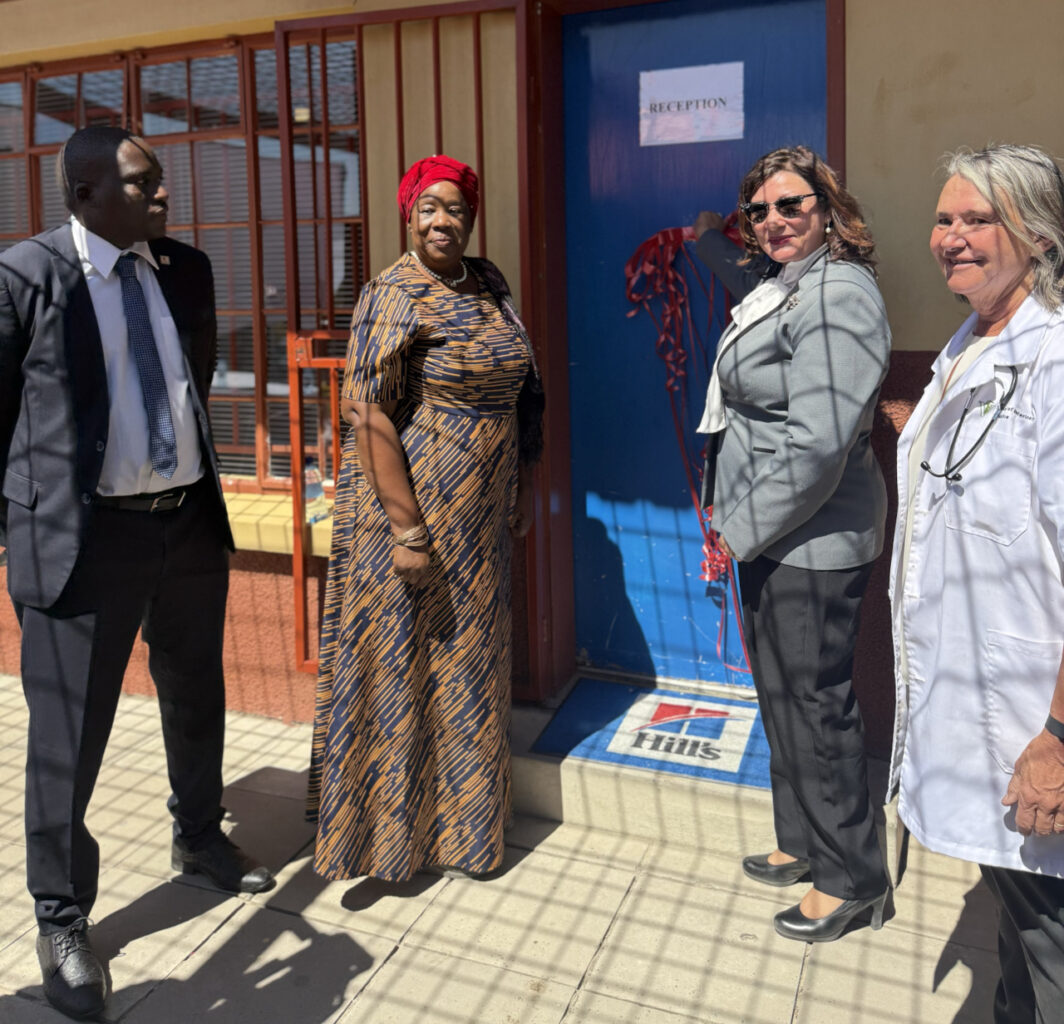
This new facility, based at UNAM’s Katima Mulilo Campus, will bring veterinary services closer to rural communities thereby tackling livestock diseases, improving public health and strengthening food security.
Speaking at the event, UNAM Vice-Chancellor, Prof. Dr. Kenneth Matengu, said the opening represents more than just infrastructure. “This is about impact. It is about taking expertise, resources and hope to where they are needed most. The Katima Mulilo Consultation Room will help us serve farmers better, train the next generation of veterinarians and contribute to the health of both animals and people in this region.”
A hub for learning and service delivery
The Veterinary Consultation Room will be staffed by specialised veterinarians, one dedicated solely to patient consultations. It also houses a fully equipped pharmacy and will:
- Provide essential services to farmers, pet owners and wildlife custodians.
- Give final-year veterinary students hands-on training in real-world rural contexts.
- Serve as a hub for research, disease surveillance and rapid diagnostics to detect and prevent diseases such as rabies, anthrax, Rift Valley Fever and avian influenza.
Honourable Sanet Steenkamp, Minister of Education, Innovation, Youth, Sport, Arts and Culture, described the opening as “a step forward, signifying our shared commitment to research, education, innovation, community development, and animal health.”
She also emphasised the One Health approach, highlighting the link between animal health, human health and environmental sustainability: “Animals sustain our rural livelihoods, our ecosystems, and our communities. When animal health is compromised, human health is at risk.”
A new dawn for animal health in the Zambezi region
The Governor of the Zambezi Region, Hon. Mareka Kabula highlighted that his facility comes at an opportune time, as the region has recently experienced several outbreaks of animal diseases.
“I thank you, Vice-Chancellor Professor Matengu, for your visionary leadership in bringing veterinary services to our community,” the Governor said. She emphasised that decentralising such services shows the university’s commitment to equity and inclusivity, ensuring that rural communities benefit directly from national investments in education and research.

Prof. Matengu noted that distributing veterinary services is a deliberate effort to extend UNAM’s footprint to underserved areas. “We want every Namibian, no matter where they live, to have access to critical services that protect livelihoods and promote well-being. This facility is proof that when we invest in education and community service, the results are transformative.”
Beyond animal treatment; strengthening communities
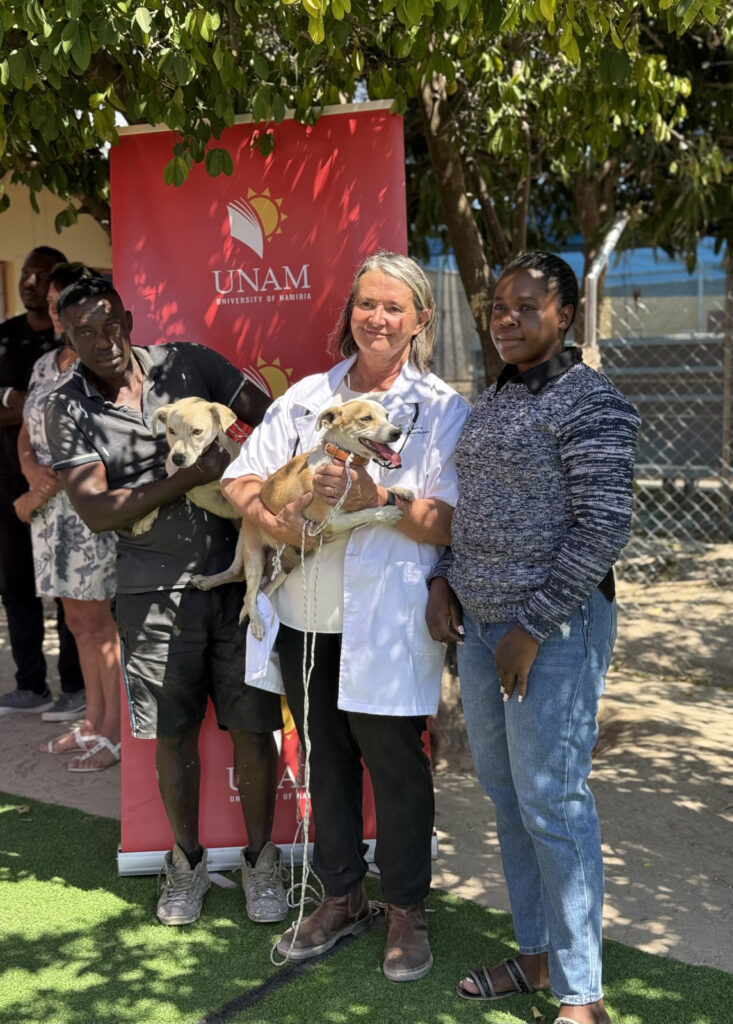
The Associate Dean for the School of Veterinary Medicine, Dr Anna Marais together with a team of veterinarians were on the ground providing vital services. Dr Marais expressed her excitement at the overwhelming response from the Katima community on the first day of the Consultation Room.
“We had 57 clients and patients see us on opening day and did a number of vaccinations for dogs but we also had several sick animals brought in for treatment. The majority of the cases were tick fever, parvovirus cases and some dental problems,” she shared.
As the plaque was unveiled by the Honourable Minister and the Governor of Zambezi Region, one message rang clear: this is more than just a clinic.
“We are not only opening a door to the treatment of animals,” Minister Steenkamp concluded, “we are opening a door to opportunity, development, and the transformation of our people.”