


In a bold and collaborative effort to reshape English literacy among young learners, the Namibian government has embarked on a nationwide rollout of the Jolly Phonics and Jolly Grammar programme. The University of Namibia (UNAM), through its School of Education (SoE) and the Department of Early Childhood Education and Care (ECEC), has taken a leading role in independently evaluating the impact of this programme, reinforcing its position as a trusted academic partner in national development.
This programme is an evidence-based reading initiative targeting preschool to Grade 3 learners. It is aligned with the global Science of Reading framework and is designed to strengthen foundational English reading skills through systematic phonics and blending techniques. It responds to persistent concerns highlighted by national and regional assessments.
Evidence from large-scale assessments, including the Southern and Eastern Africa Consortium for Monitoring Educational Quality (SACMEQ) and the National Standardised Achievement Tests (NSAT), continues to highlight serious literacy concerns. Earlier SACMEQ reports (I–III) revealed that nearly 39% of Namibian Grade 6 learners could not read for meaning in English, while the 2015 NSAT showed that 87% of Grade 7 learners performed below the basic proficiency level.
Although the SACMEQ IV 2017 assessment indicated some improvement, with only 16.4% of Grade 6 learners reading at Levels 1–3 and 34.9% reaching the higher proficiency levels, the results underscore the urgent need for more effective and structured reading instruction. The Jolly Phonics programme seeks to address this gap through systematic, explicit teaching of letter sounds and blending techniques that support foundational reading development.
While the programme has received substantial support from teachers and policymakers, it has also generated discussion around three key issues. The first is the lack of independent Namibian research to verify its impact. The second concern relates to its focus on English, which some argue may overshadow other Namibian languages of instruction. The third involves the relatively high cost of Jolly Phonics materials, raising questions about long-term sustainability in resource-limited schools.
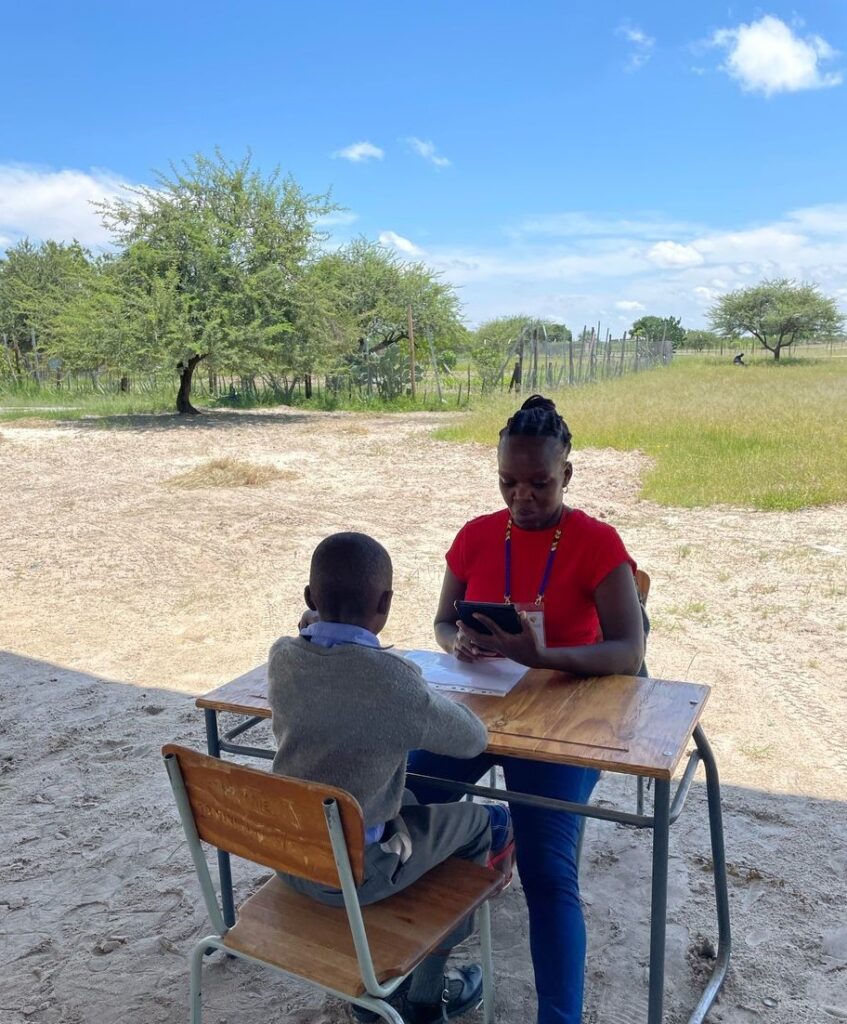
To address these issues, the Department of Early Childhood Education and Care (ECEC) in the School of Education (SoE), Khomasdal Campus, in partnership with Genesis Analytics, conducted an independent impact evaluation using the Early Grade Reading Assessment (EGRA). The study aimed to measure whether Jolly Phonics effectively improves reading outcomes among Grade 3 learners. The evaluation included all phases of field operations, assessor recruitment, training, logistics, data collection, and quality assurance, under the leadership of Dr. Jessica Jansen and Dr. Renate Shikwaya, with invaluable campus-based support from Dr. Beausetha Bruwer and Dr. Pamela February.
Fieldwork, conducted from 3–14 March 2025, covered 100 schools across two regions (Oshana and Oshikoto) and included over 2,189 EGRA assessments and 97 one-on-one Grade 3 teacher surveys. The two regions were purposefully selected: Oshana teachers had received Jolly Phonics training up to Grade 3 level, while Oshikoto teachers had not, allowing for meaningful comparison.
Field assessors were supervised by Mr. André Kandundu, Ms. Helga Kaurora, Ms. Ivy Heyman Van Wyk, Ms. Serena Hoeses, Ms. Jacolynn Van Wyk, and Mr. Gustav Gustav. A total of 30 UNAM student graduates and graduands participated in the study as fieldworkers.
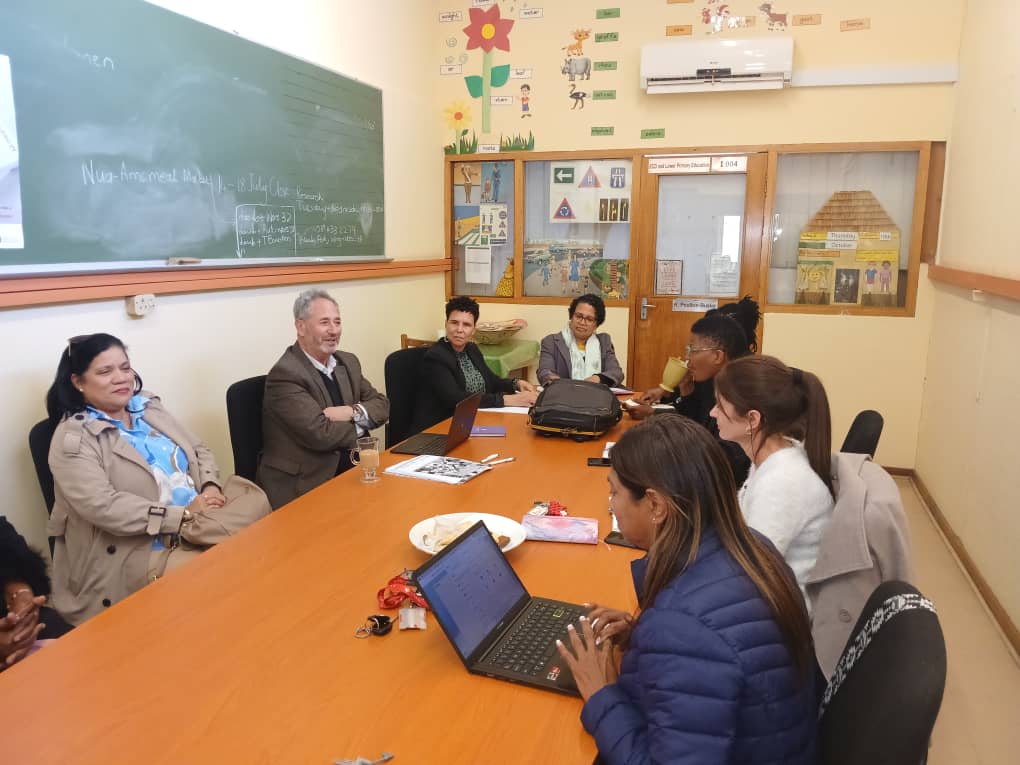
The findings were consolidated and presented to the Ministry of Education, Innovation, Youth, Sport, Arts and Culture (MEIYSAC) on 3 November 2025, offering valuable, data-driven insights for both policy refinement and classroom practice. Although not all outcomes showed statistically significant effects, the study provided an important evidence base to inform the future implementation and scaling of the Jolly Phonics and Jolly Grammar programmes in Namibia. As such, this baseline evaluation forms a strong platform for the ministry to guide future literacy improvement initiatives.
In recognition of the University of Namibia’s contribution, Professor Brahm Fleisch of the University of the Witwatersrand commended the research team, stating that “the UNAM team demonstrated their commitment, capacity, and passion as a reliable collaborator in driving evidence-based research projects.”
Through this collaborative effort, UNAM reaffirmed its research leadership, institutional strength, and commitment to national development. By anchoring the study in local expertise and rigorous methodology, the university has strengthened its role as a trusted partner in advancing evidence-based strategies for literacy improvement in Namibia.
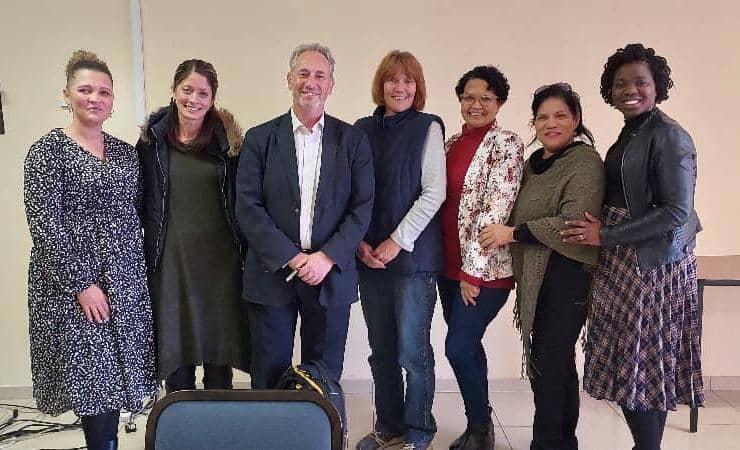
This study marks the beginning of a longer-term commitment by the ECEC Department to conduct longitudinal research on early grade literacy and ensure that future interventions are grounded in local evidence and practice. Through this initiative, UNAM not only affirms its scholarly rigor but also contributes directly to the broader national mission of improving learner outcomes and shaping a more literate, empowered generation of Namibians.