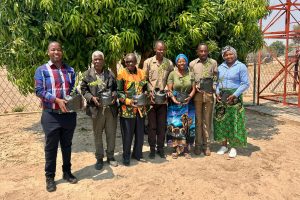



The UNAM Physics section recently hosted the Transient Array Radio Telescope (TART) Workshop, marking a historic milestone with the installation of Namibia’s first radio telescope.
Namibia now joins South Africa, Mauritius, Kenya, Ghana, and Zambia in hosting a TART, expanding Africa’s growing network of scientific collaboration in space science and technology.
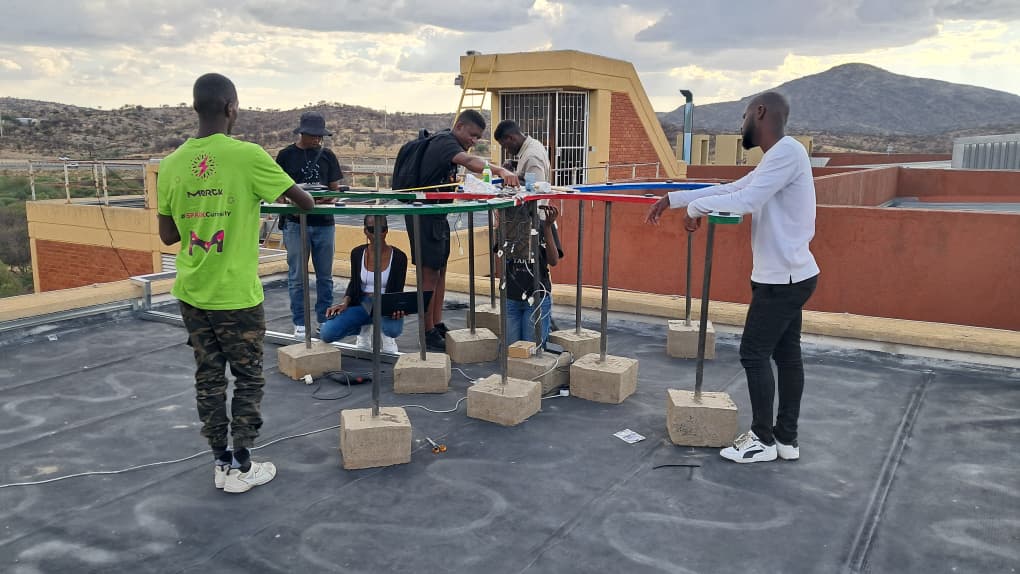
The TART is designed to observe the entire sky continuously, allowing it to detect transient events such as satellite signals, near-Earth objects, and any event that transmit signals within a frequency band centred at 1.575 GHz, with a bandwidth of 2.5 MHz. It also serves as a platform for developing and testing new imaging algorithms, improving the way scientists process and interpret radio astronomy data.
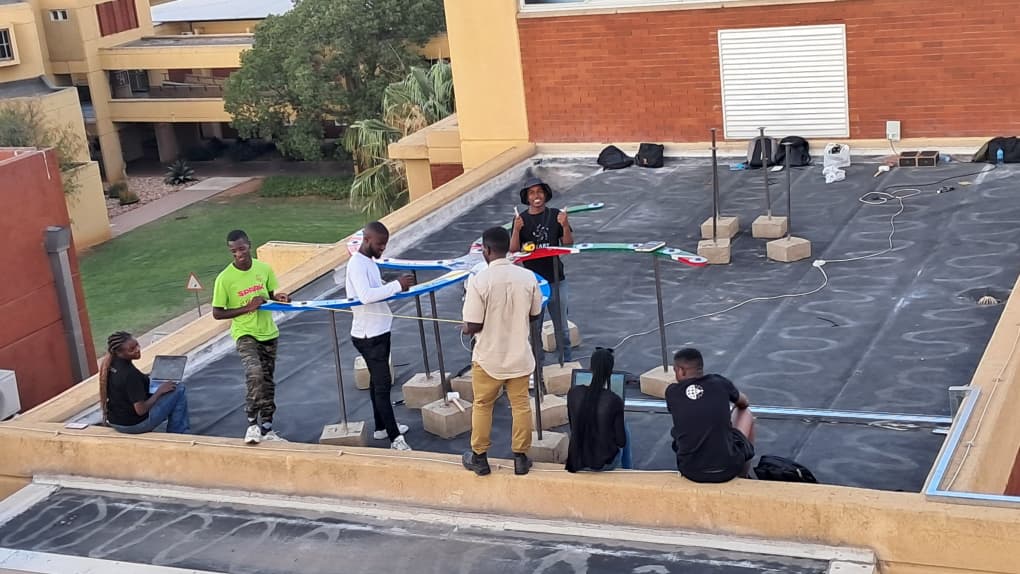
During the workshop, participants built the telescope from scratch, gaining hands-on experience in assembly, calibration, and data acquisition. The event included a series of lectures and practical sessions, covering topics such as radio interferometry, telescope design, and transient detection techniques.
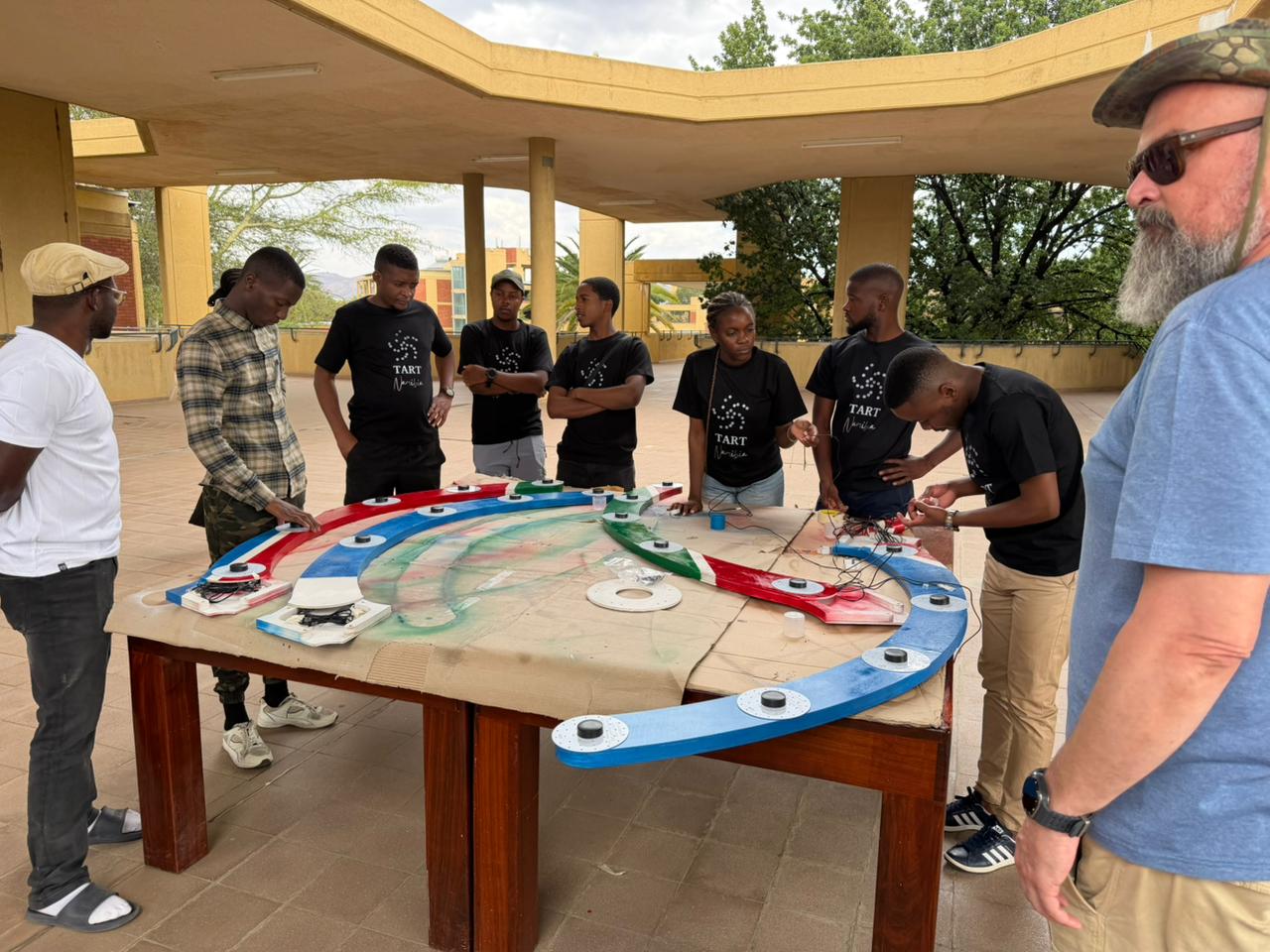
In total, 16 participants attended the workshop, bringing together academics from South Africa, the Netherlands, New Zealand, and Madagascar, as well as students and staff from UNAM. Among the attendees was also an AS-level high school learner with a strong interest in astronomy and a PhD student from Mozambique
The event also opened new doors for student-led research at UNAM. Shain Mukungu, a prospective astrophysics MSc student, will become the first to conduct a research project using TART Namibia, setting the stage for future local contributions to radio astronomy.
This development adds to Namibia’s growing involvement in radio astronomy, alongside the Africa Millimetre Telescope (AMT) – the first radio telescope in Africa that is sensitive to millimetre wavelength radiation, set to be built in Namibia.
“The TART complements the goals of the AMT quite well. While the observing frequency bands of the AMT are much higher than that of the TART, the data handling and science interpretation skills that students will gain from the TART are similar to those that the AMT will require when it comes online in the near future” says Dr. Eli Kasai, Senior Lecturer of Physics, UNAM, and TART Namibia Project Lead.
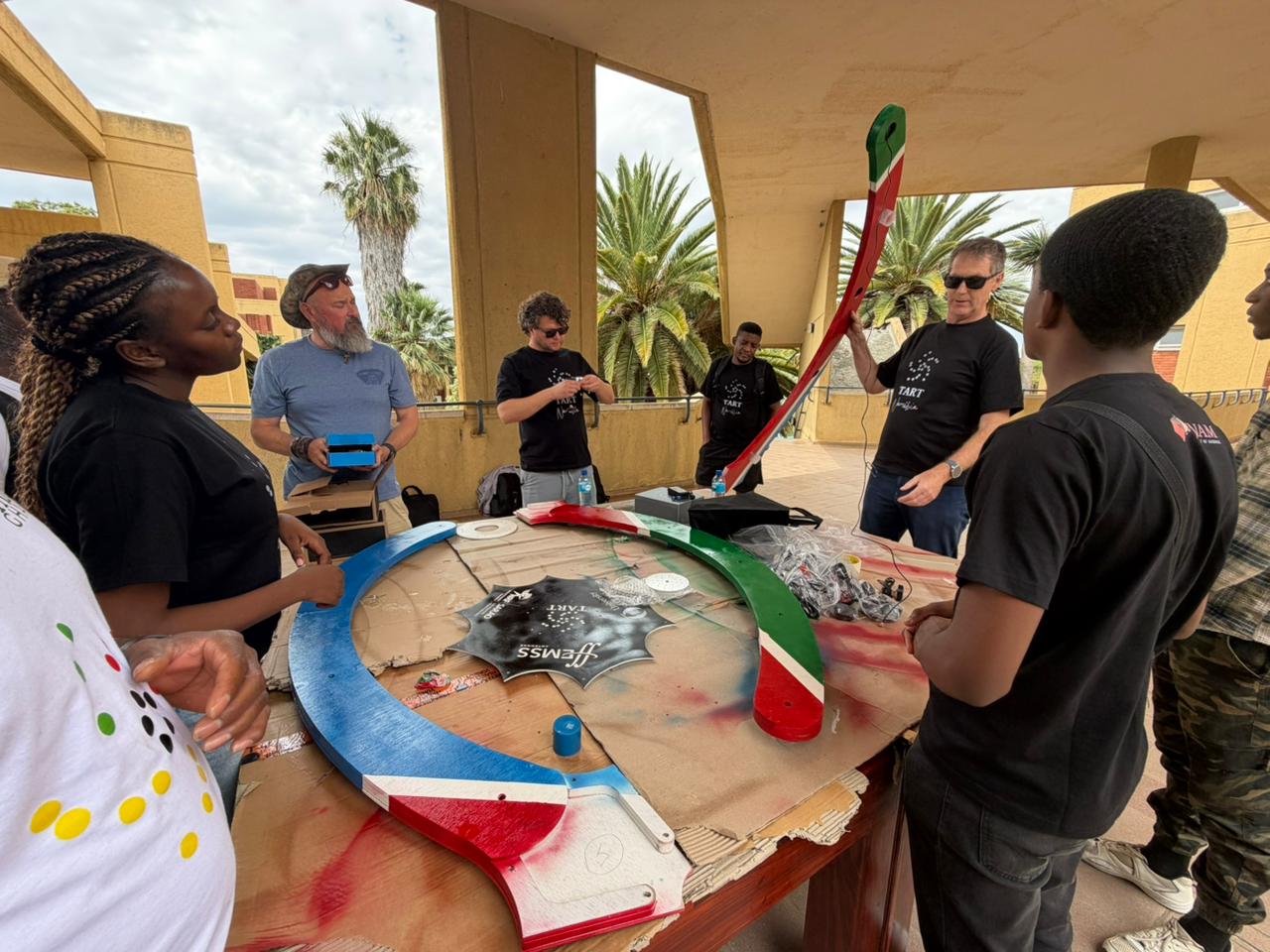
“The TART is a great training instrument, especially as Namibia prepares for bigger projects such as the AMT and the Square Kilometre Array, ensuring active participation by many of the local researchers and students”, says Professor Michael Backes, Professor of Physics, UNAM, and co-principal investigator of the AMT.
According to Dr Lott Frans, UNAM’S first Astrophysics graduate and a UNAM Development in Africa with Radio Astronomy Postdoctoral Fellow: “The TART represents a new era for Namibian astronomy, offering students and researchers valuable opportunities to engage in hands-on astronomical research with a radio telescope on the UNAM Main Campus.”
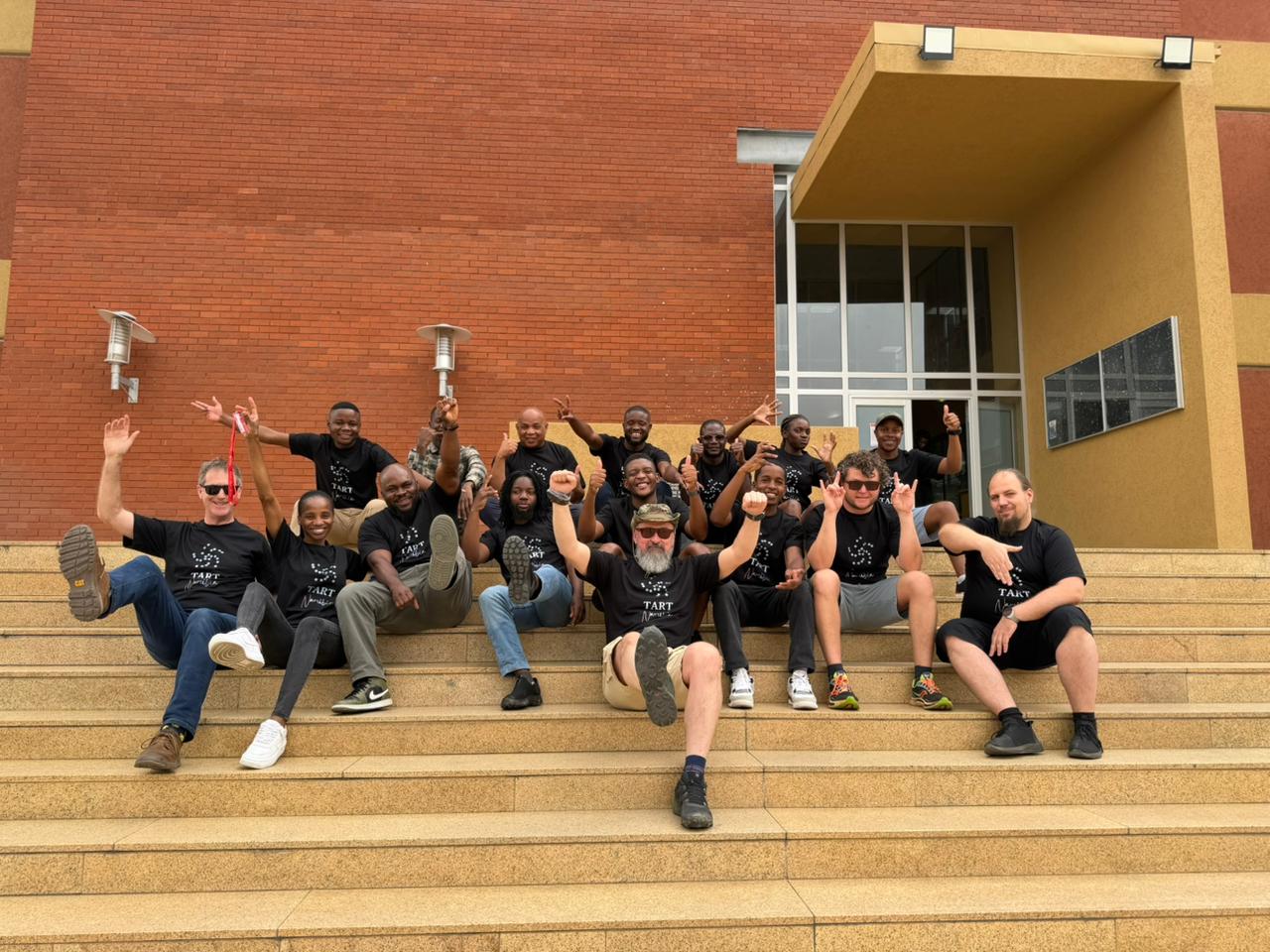
With the successful installation of Namibia’s first TART and the excitement it has already ignited among scholars across the continent and beyond, UNAM stands at the prow of a new astronomical frontier. This milestone does more than place Namibia on the global map of radio astronomy, it boldly signals that African science is ready to listen to the whispers of the cosmos.