


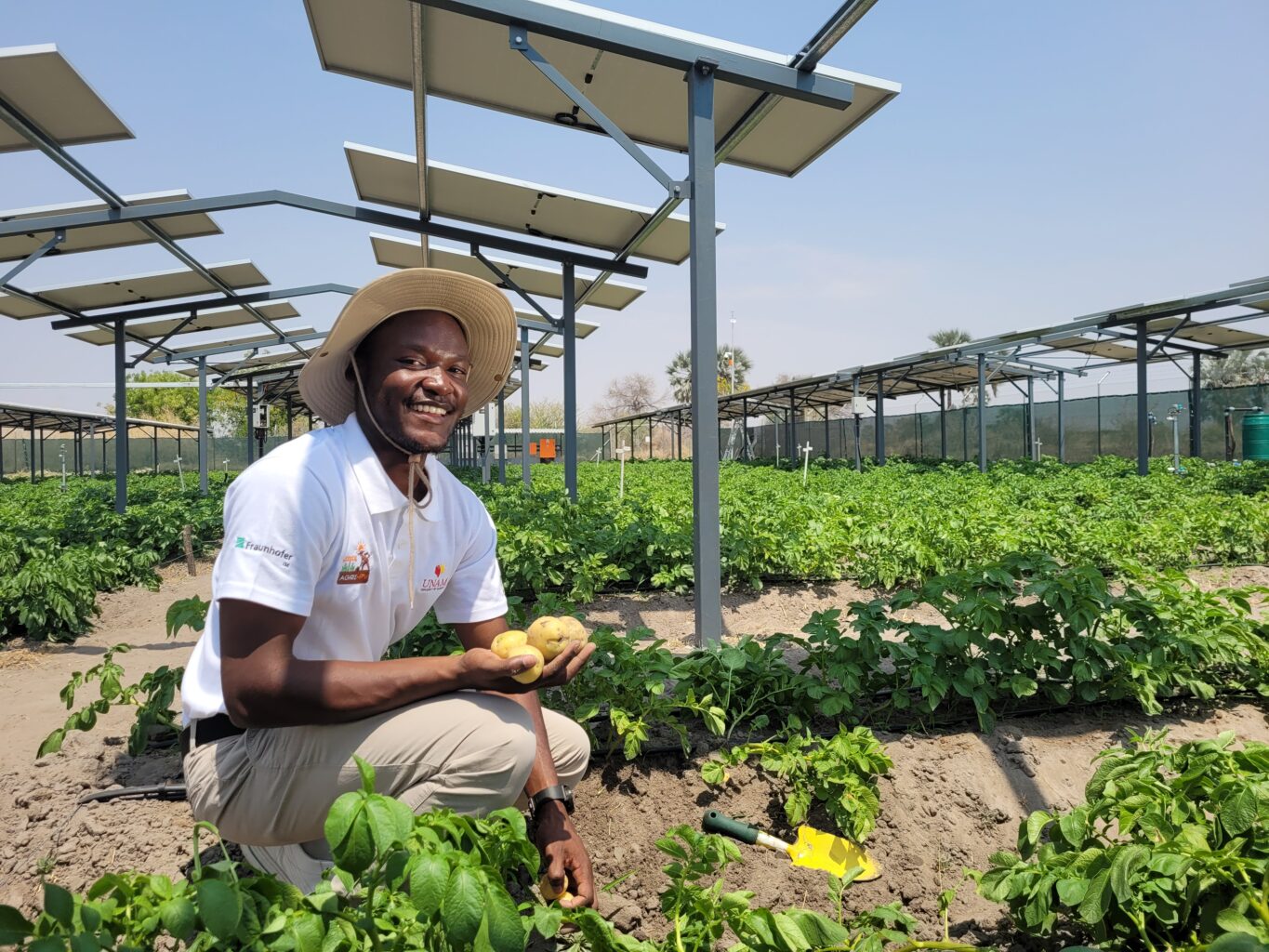
The University of Namibia (UNAM) has once again reaffirmed its role as a national trailblazer in research and innovation, unveiling Namibia’s first large-scale Agrivoltaic (Agri-PV) farming system at Ogongo Campus. The initiative, which combines solar energy generation with agricultural production is a milestone for the country introducing a dual land-use system that promises both food security and clean energy.
At Ogongo Campus, 686 solar panels have been installed, making it one of the largest Agri-PV systems in Africa. Researchers have begun testing different crop varieties under the panels, from tomatoes and potatoes to upcoming trials with sweet potato and cowpeas. The system is expected to generate over 2,000 kilowatt-hours (kWh) of electricity daily and up to 800 megawatt-hours (MWh) annually more than enough to cover the campus’s energy needs while also feeding surplus power back into the grid.
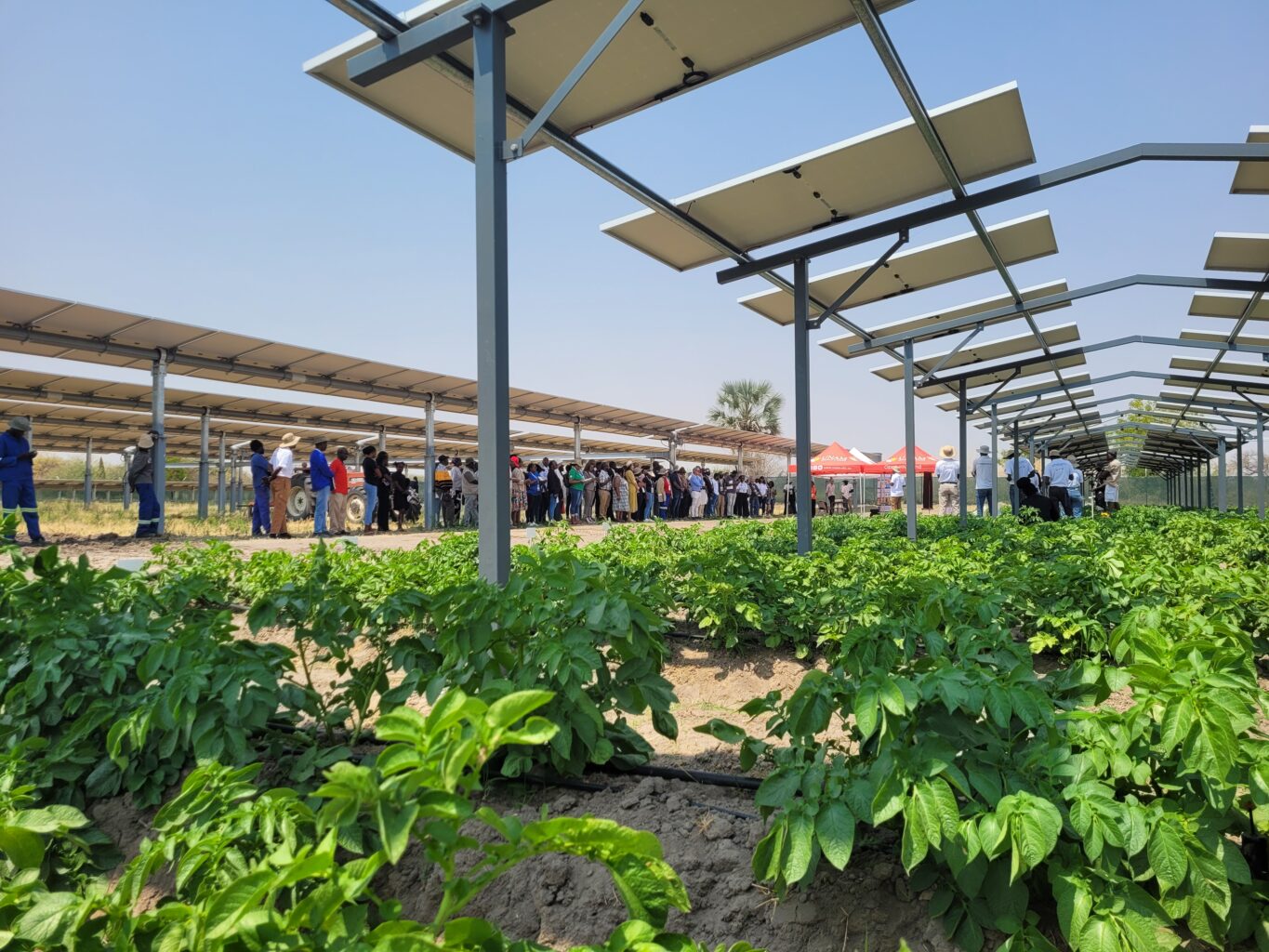
Speaking at the showcasing event on 17 September 2025 , which drew 300 participants over 3 days, Immanuel Shikongo, Regional Governor of Omusati, applauded the vision behind the project:
“We are gathered to celebrate not only an innovation, but also a vision. To celebrate the vision of Agri-PV, where agriculture and clean energy work hand in hand for the benefit of our people.”
For the Ogongo Campus, where over 500 students are enrolled in agriculture, environmental science, and natural resource management, the project is more than an infrastructure upgrade. It is a living laboratory – giving students hands-on experience with cutting-edge technology that is reshaping farming globally.
Ogongo is just one piece of UNAM’s broader commitment to sustainable innovation. Across its campuses, the university is rolling out solar energy systems tailored to the unique needs of each community. While Ogongo focuses on food security and clean energy through Agri-PV, other campuses are exploring solar-powered parking systems, digital learning solutions, and green campus models; all underscoring UNAM’s mission to address Namibia’s pressing challenges through research and practical solutions.
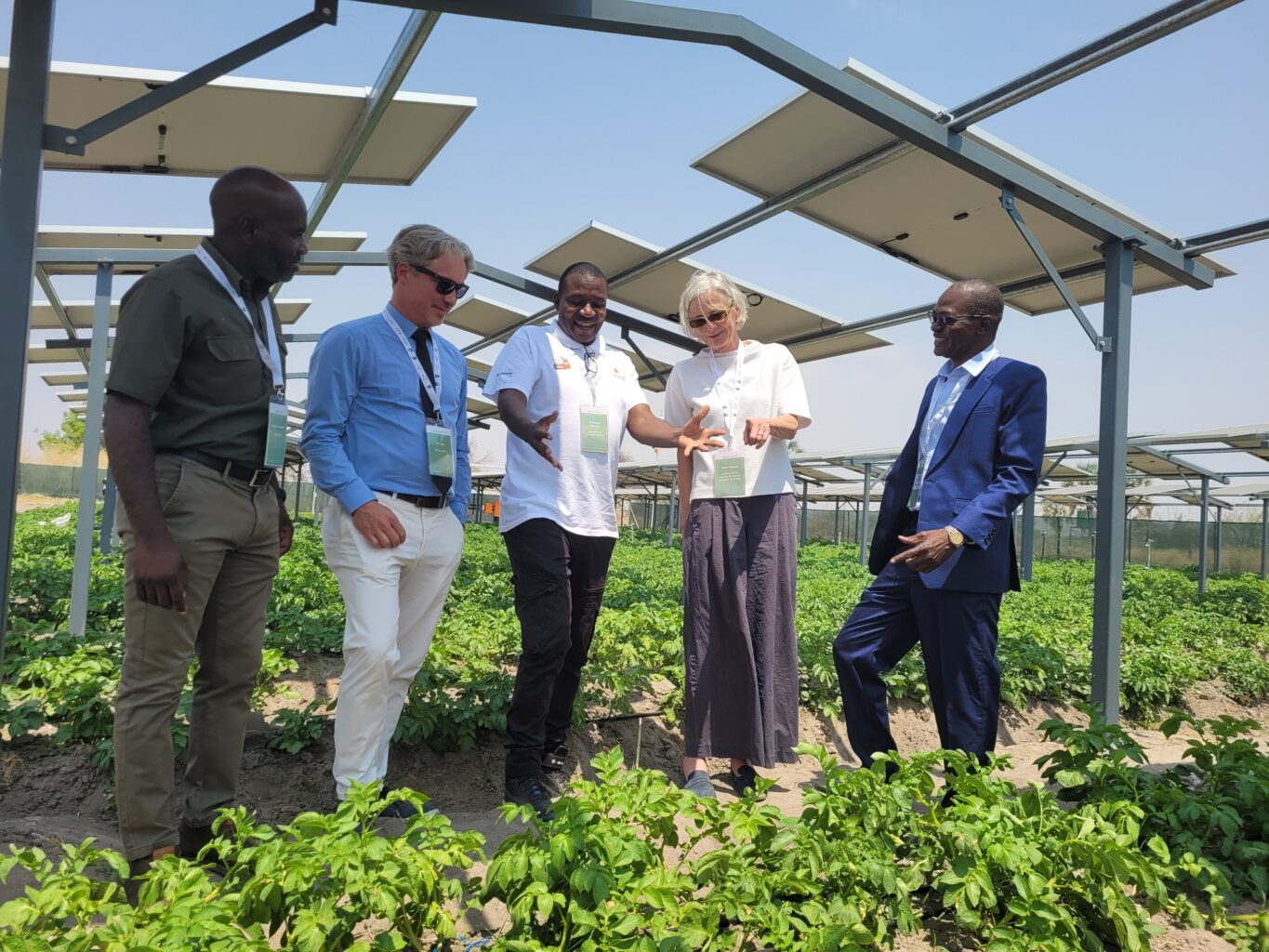
“For UNAM, this is more than an academic exercise,” said Dr. Joseph Ndinoshiho, Acting Pro Vice-Chancellor Research, Innovation & Development at UNAM.
“This is the fulfilment of our mandate to pioneer research and innovation that supports national development and to prepare the knowledge and capacity needed for Namibia’s future. The Agri-PV project is therefore a symbol of what UNAM stands for: science in service of the people, research that responds to climate change and innovation that creates pathways to food security and clean energy.”
The project is implemented through the Global Fund for the Promotion of Innovation in Agriculture (i4Ag), working closely with the bilateral Farming for Resilience (F4R) Project, a joint initiative of the German Development Agency (GIZ) and Namibia’s Ministry of Agriculture, Water and Land Reform (MAFWLR).
Ulrike Metzger, Head of Development Cooperation at the German Embassy in Namibia, praised the collaboration stating:
“May this showcasing event spark your enthusiasm for this new approach and serve as a catalyst as we work towards a prosperous, inclusive and sustainable future.”
As Namibia grapples with the twin challenges of food insecurity and climate change, these campus-based innovations demonstrating how education, research, and technology can converge to serve both people and planet. With solar panels rising above fields of tomatoes and potatoes, the Ogongo Agri-PV project is not just a farm, it is a glimpse into a more resilient future.