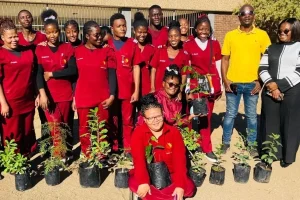



What may have appeared to be an ordinary harvesting activity at the University of Namibia’s Zero Emission Research Initiative (ZERI) on 13 May 2026 carried far greater significance.
It reflected the growing role of research, innovation, and youth participation in addressing Namibia’s food security challenges.
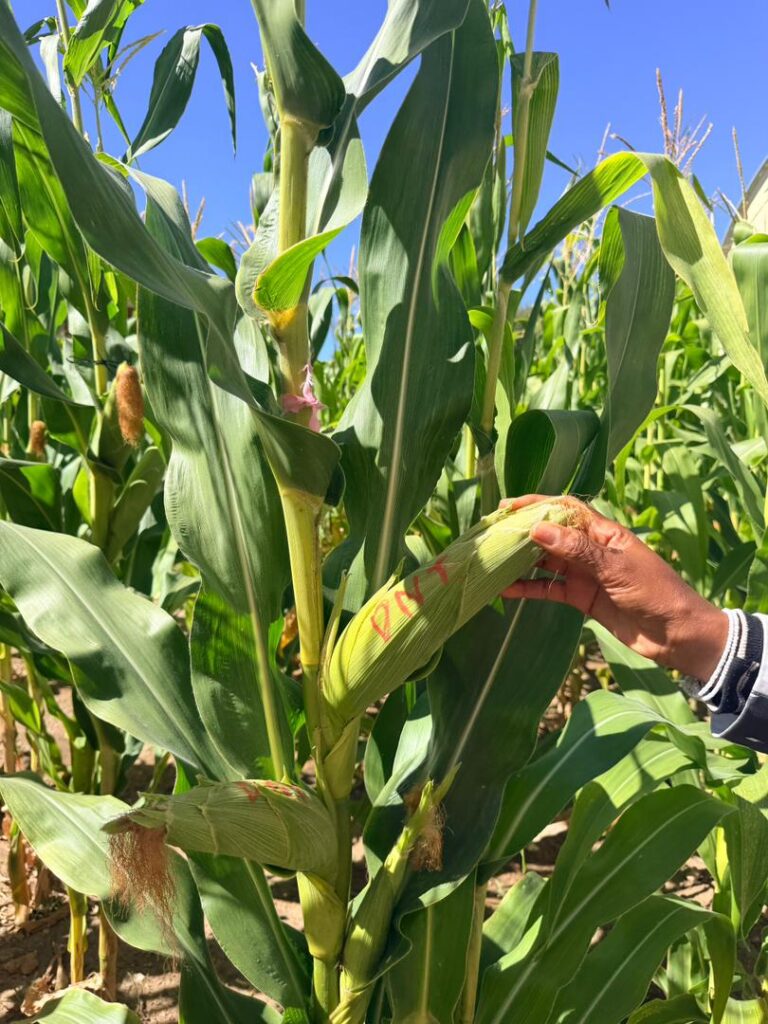
The maize, planted earlier this year by student interns from the School of Science, forms part of ongoing research projects focused on sustainable agriculture, crop improvement, and urban food production at ZERI.
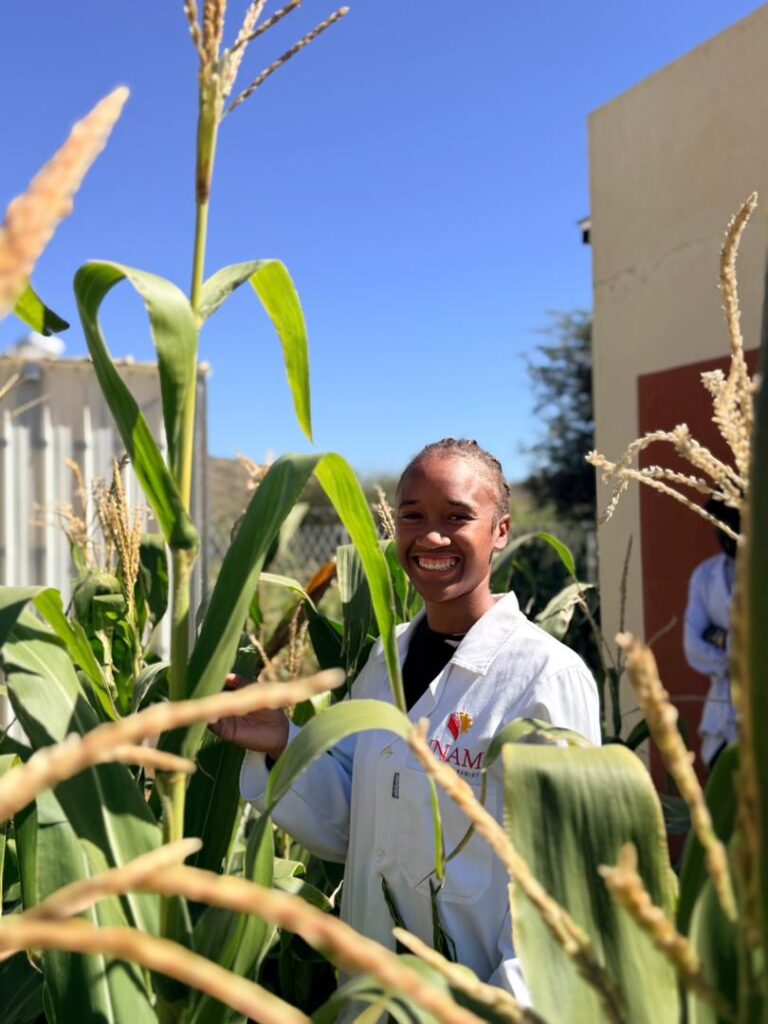
Speaking during the harvesting activity, Senior Technologist at ZERI, Ms Isabella Ueitele, described the initiative as a reflection of the University’s commitment to sustainability and practical research that transforms knowledge into community impact.
“Today we are gathered here to celebrate the hard work of our student interns, and we will be harvesting some of the produce they have grown,” she said.
Her remarks highlighted not only the students’ dedication, but also the importance of creating opportunities where academic learning meets practical application.
Director of the Centre for Research Services, Prof. Davis Mumbengegwi, praised the collaborative efforts between researchers and students, noting that such initiatives contribute meaningfully towards national development.
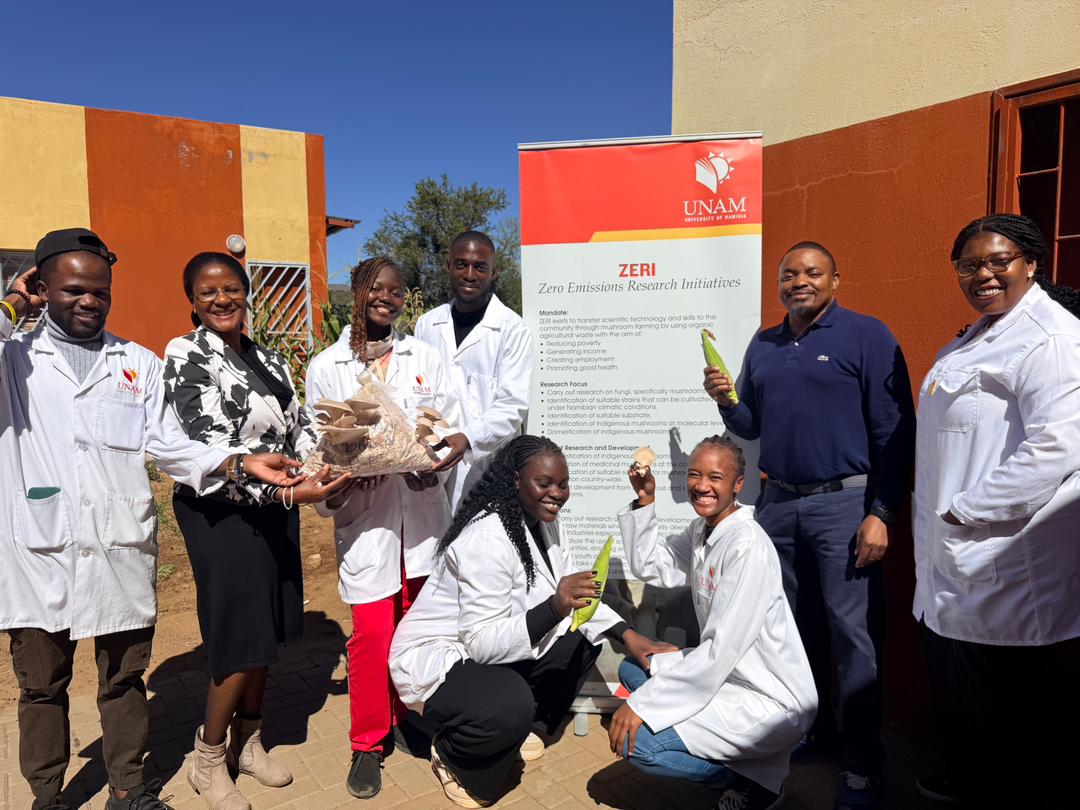
For the students involved, the project represented far more than planting and harvesting crops. It became a platform for learning, experimentation, and innovation within the field of sustainable agriculture.
Third-year Biochemistry student, Kakuhire Makari, reflected on the broader significance of the initiative, emphasising that the activity symbolised hope and possibility for local food production.
“Alongside my colleagues, we are here to demonstrate that today is about more than harvesting; it is about proving that food security is achievable at the University of Namibia,” she said.
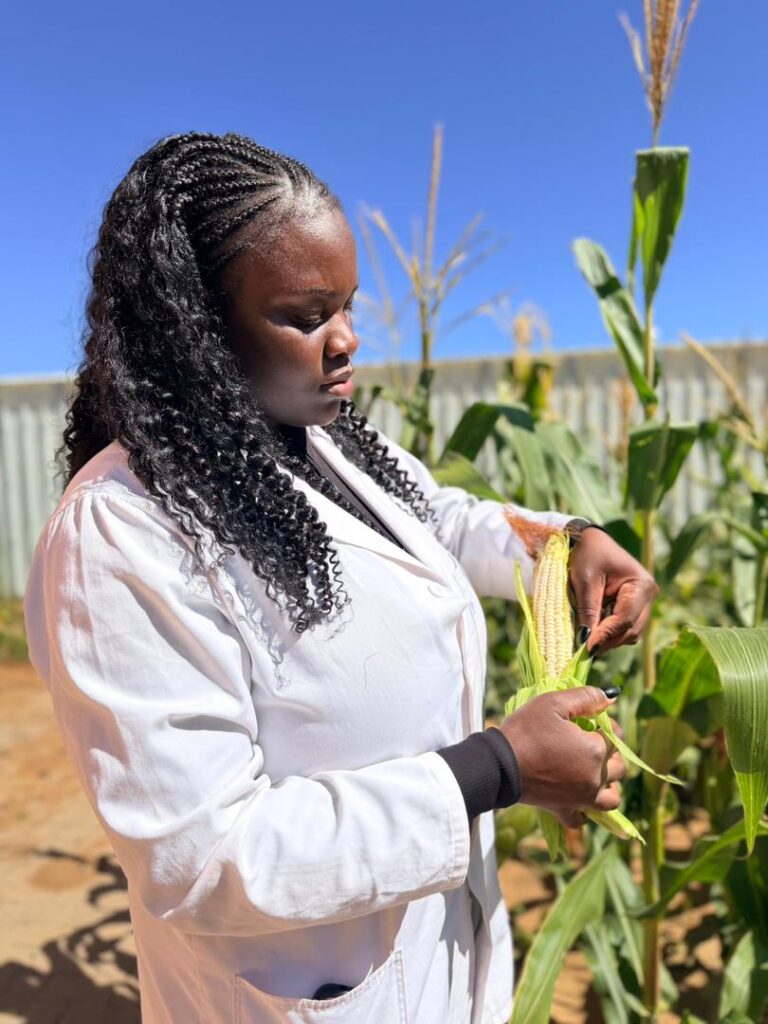
Associate Research Professor at the Centre for Research Services, Prof. Lydia Horn, explained in full context, that the initiative forms part of broader efforts aimed at identifying maize varieties best suited for sustainable urban food production.
“The students themselves were responsible for planting the maize, and we are now selecting the best-performing variety that can be carried over into the next planting season,” she explained.
Project Assistant and recent UNAM graduate in Microbiology, Ms Hilma Kano, described the experience as deeply rewarding, particularly after transitioning from student intern to project assistant.
“It is very rewarding for me to have served as a student intern last year and now return as a Project Assistant. This experience continues to enhance my skills and prepare me for future employment opportunities,” she shared.
Meanwhile, third-year Microbiology student, Gilliane Naris, explained that students were actively involved in substrate inoculation and temperature management within the mushroom house, contributing to broader agricultural research activities taking place at ZERI.
In addition to the actual harvest of maize, the event highlighted current scientific studies related to crop resilience and agricultural advancement. Nghishitivali David, a fourth-year undergraduate student working under Prof. Horn’s guidance on gamma-induced radiation mutation breeding research, provides evidence of this.
He noted that the research currently focuses on eight varieties, with variety five emerging as the leading performer due to its production of larger-sized beans.
“We are evaluating which varieties perform best in terms of yield and growth so that we can assist farmers and community members around Windhoek who want to grow their own crops,” he explained.
In another research project, first-year Master’s student Johannes Dawid is investigating the effects of Alectra on cowpea genotypes under the supervision of Prof. Horn. This is based on finding out how Alectra affects different varieties of cowpea and how farmers can better manage crop performance.
The harvesting activity ultimately demonstrated how research, innovation, and student participation can work hand in hand to support sustainable food production and community empowerment in Namibia.
ZERI sells a variety of crop products at UNAM, including beans, maize, mushrooms, tomatoes, potatoes, and other fresh produce. For more information, please contact Ms Isabella Ueitele on +264 81 238 5615.